

Mortise Lock Install & Repair Austin TX - Okey DoKey Locksmith
If you need mortise lock change or replacement in Austin, Texas, Okey DoKey Locksmith provides fully mobile, on-site service for homes, apartments, offices, storefronts, and other properties with mortise door hardware. We work with older mortise locks, modern commercial mortise systems, mortise cylinders, lock bodies, trim, handles, latches, and deadbolts.
Unlike a standard cylindrical lock, a mortise lock has a rectangular lock body installed inside a pocket in the edge of the door. Changing one requires more than simply removing two screws and installing another lock. The replacement must fit the existing door preparation and operate correctly with the cylinder, trim, spindle, latch, deadbolt, strike, and door frame.
Before replacing anything, we inspect the existing hardware and determine whether the problem requires a complete mortise lock change, mortise cylinder replacement, rekeying, repair, adjustment, or another solution. Our goal is to restore dependable security and smooth operation while preserving the door and existing architectural details whenever practical.
Contents
- Mortise Lock Change Service in Austin
- What Is a Mortise Lock?
- Parts of a Mortise Lock System
- When Should a Mortise Lock Be Changed?
- Mortise Cylinder Replacement vs Complete Lock Replacement
- Repair, Rekey, or Replace a Mortise Lock?
- Replacing Old and Antique Mortise Locks
- Common Mortise Lock Problems
- How Mortise Lock Replacement Works
- Mortise Lock Measurements and Compatibility
- Mortise Lock Security Upgrades
- Residential Mortise Locks
- Commercial Mortise Locks
- Mortise Lock Replacement Cost Factors
- Mortise Lock Replacement FAQ
- Why Choose Okey DoKey Locksmith?
- Get Help Now
Mortise Lock Change Service in Austin
Okey DoKey Locksmith provides mortise lock change and replacement service throughout Austin through our fully mobile locksmith operation. Service is performed directly at the property so the locksmith can inspect the lock in relation to the actual door, frame, strike, and existing preparation.
This is particularly important with mortise hardware because the condition of the door can affect how the lock operates. A replacement lock may still bind or fail to latch correctly if the door has sagged, the strike has moved, or the existing mortise pocket does not match the replacement hardware.
We evaluate the complete opening before recommending a solution.
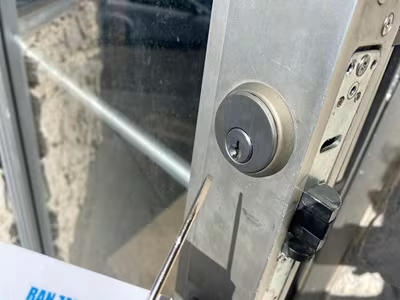
Mortise lock services may include
- Complete mortise lock replacement
- Mortise lock-body replacement
- Mortise cylinder replacement
- Mortise cylinder rekeying
- Latch and deadbolt troubleshooting
- Loose handle and trim correction
- Strike and door alignment
- Replacement of worn compatible components
- Security hardware upgrades
- Keying compatible cylinders alike
What Is a Mortise Lock?
A mortise lock is a door-locking system built around a rectangular lock body installed inside a pocket, or mortise, cut into the edge of the door.
This differs from a typical cylindrical residential lock, where much of the mechanism passes through round holes bored through the face of the door.
Mortise locks are commonly found on older residential doors, solid wood entry doors, apartment buildings, offices, storefronts, institutional properties, and commercial doors designed for heavier use.
A mortise lock can combine several functions inside one lock body, including the latch and deadbolt. The cylinder, lever, knob, thumbturn, escutcheon, or decorative trim then interacts with that internal mechanism.
If you are comparing lock systems, see Deadbolt VS Mortise for an explanation of the differences between the two designs.
Parts of a Mortise Lock System
Understanding the different components is useful because a problem with one part does not necessarily mean the entire mortise lock needs replacement.
Mortise lock body
The lock body is the main mechanical assembly installed inside the door. It contains the mechanisms responsible for latch, bolt, and handle operation.
Mortise cylinder
The cylinder is the keyed component of many mortise systems. If the goal is simply to change which key operates the door, the cylinder may sometimes be rekeyed or replaced without changing the entire mortise lock body.
Latch
The spring latch holds the door closed during normal use and retracts when the lever or knob is operated.
Deadbolt
Mortise lock bodies equipped with a deadbolt provide an additional locking function controlled by the key, thumbturn, or other hardware.
Spindle, lever, or knob
The handle assembly operates the latch through the lock body. Loose handles do not always indicate that the entire mortise mechanism has failed.
Faceplate
The faceplate is visible along the edge of the door and helps secure the lock body inside the mortise pocket.
Strike
The strike is mounted on the door frame and receives the latch and, when applicable, the deadbolt. Correct alignment between the lock and strike is essential.
When Should a Mortise Lock Be Changed?
A complete mortise lock change may be appropriate when the internal mechanism is badly worn, damaged, unreliable, or no longer suitable for the way the door is used.
Common reasons for replacement
- Lock body is mechanically damaged
- Latch repeatedly fails to retract or extend
- Deadbolt no longer operates reliably
- Internal components are badly worn
- Lock has been damaged during forced entry
- Replacement parts are unavailable or impractical
- Existing hardware no longer meets security needs
- Door hardware is being renovated or upgraded
- Repeated repairs have not provided reliable operation
However, changing the complete lock is not automatically necessary because a key was lost or because the cylinder has become difficult to operate. Those situations may have simpler solutions.
Mortise Cylinder Replacement vs Complete Lock Replacement
One important distinction is the difference between changing a mortise cylinder and replacing the complete mortise lock.
Mortise cylinder replacement
If the lock body is functioning properly but the keyed cylinder is damaged, worn, incompatible with a desired key system, or needs to be changed for key-control reasons, replacing only the cylinder may be sufficient.
This preserves the existing lock body and much of the surrounding hardware.
Complete mortise lock replacement
If the internal lock body is worn, broken, badly damaged, or incompatible with the desired hardware, the complete mechanism may need replacement.
Because the lock body sits inside the door, compatibility with the existing mortise pocket becomes particularly important.
Changing access after lost keys
If the only concern is that an old or lost key should no longer operate the door, complete replacement may not be necessary. A compatible cylinder can often be rekeyed or replaced instead.
Repair, Rekey, or Replace a Mortise Lock?
The correct solution depends on which component has failed and what you want to accomplish.
Rekey the lock when
Rekeying may be appropriate when the lock works correctly but you want existing keys to stop working. This is common after moving, tenant turnover, employee changes, or lost keys.
Repair or adjust the lock when
Repair may make sense when the main hardware remains serviceable and the problem involves alignment, loose trim, a worn component, or another correctable mechanical issue.
Replace the cylinder when
Cylinder replacement may be appropriate when the keyed portion is damaged, severely worn, or needs to be changed while the lock body remains usable.
Replace the complete mortise lock when
Full replacement is generally considered when the lock body itself is damaged, heavily worn, unreliable, or no longer practical to repair.
We inspect the existing hardware before recommending which approach makes sense.
Replacing Old and Antique Mortise Locks
Older Austin homes can have mortise hardware that has been in the door for decades. These locks may have unusual dimensions, discontinued components, decorative trim, skeleton-key mechanisms, or door preparation that does not match current hardware.
Replacing an old mortise lock therefore requires more planning than replacing a modern standardized lock.
Preserving original doors and trim
Older solid-wood doors and decorative hardware can be worth preserving. When practical, we evaluate options that minimize unnecessary cutting and changes to the visible portions of the door.
Replacement hardware may not be identical
An exact replacement for an older lock body may no longer exist. In those cases, dimensions, function, trim coverage, door preparation, and available replacement hardware must be compared before deciding how to proceed.
Repair may sometimes be preferable
If original hardware is serviceable and compatible parts are available, repairing it may preserve the appearance of the door better than converting it to an unrelated modern lock.
Conversion to another lock type
Converting an old mortise door to another locking system can sometimes be done, but it may require modifications or additional trim to cover the existing mortise preparation. We evaluate those consequences before recommending a conversion.
Common Mortise Lock Problems
Mortise locks can develop several symptoms as the hardware, door, and frame age. Identifying the symptom helps determine whether the problem is inside the lock or elsewhere in the opening.
Key is difficult to turn
A difficult key can result from key wear, cylinder wear, internal lock problems, deadbolt pressure, or door misalignment.
Door only locks when pushed or pulled
If the key or thumbturn works only while pressure is applied to the door, the deadbolt or latch may not be aligned correctly with the strike.
Lever or knob feels loose
Loose trim, spindle components, mounting hardware, or wear inside the lock can cause excessive movement at the handle.
Handle moves but latch does not retract
This may indicate a problem involving the spindle, hub, latch mechanism, or another internal component.
Latch does not catch the strike
Door sag, hinge movement, strike position, or latch wear can prevent the door from latching even when the lock itself is otherwise functional.
Deadbolt will not fully extend
The bolt may be contacting the strike or frame, or there may be an internal mechanical problem. Testing the bolt with the door open helps distinguish between the two.
Lock works with the door open but not closed
This is a strong indication that door or strike alignment should be evaluated before replacing the lock.
How Mortise Lock Replacement Works
Mortise lock replacement begins with an inspection of the existing hardware and door preparation. This allows us to determine what can be reused and what actually needs replacement.
1. Inspect the existing lock
We check the lock body, cylinder, handles or levers, trim, latch, deadbolt, strike, door alignment, and surrounding door material.
2. Identify the existing preparation
Important dimensions and hardware characteristics are checked before selecting a replacement.
3. Remove the existing hardware
The trim, cylinder, spindle, and lock body are removed carefully to reduce unnecessary damage to the door and finish.
4. Compare the replacement hardware
The replacement is checked against the existing mortise pocket, door thickness, trim preparation, and required function.
5. Fit and install the lock
The lock body and related hardware are installed and adjusted for proper operation.
6. Check the strike and alignment
The latch and deadbolt must enter the strike correctly without excessive pressure or forcing.
7. Test the complete system
We test the key, cylinder, handle, latch, deadbolt, and door operation before completing the service.
Mortise Lock Measurements and Compatibility
Mortise locks are not universally interchangeable. Two locks that look similar from the outside can have different dimensions and functions.
Compatibility can depend on factors such as:
- Lock-body dimensions
- Door thickness
- Mortise pocket dimensions
- Backset
- Faceplate dimensions
- Handle or spindle position
- Cylinder position
- Deadbolt location
- Trim preparation
- Door handing
- Strike configuration
- Required lock function
For this reason, identifying the existing hardware before purchasing replacement parts can help avoid incompatible equipment.
Mortise Lock Security Upgrades
A mortise lock change can also be an opportunity to review the security and usability of the door.
New mortise cylinder
A compatible replacement cylinder can provide new keys while retaining an otherwise functional lock body.
Rekeying
Compatible cylinders can often be rekeyed so previous keys no longer operate the door.
Keying multiple locks alike
When compatible cylinders and keyways are used, several doors may be able to operate from the same key.
Door and strike improvements
Reliable security depends on more than the lock itself. Door condition, frame strength, strike attachment, and alignment should also be considered.
Additional deadbolt options
Some doors may support additional locking hardware depending on their construction and existing preparation. For information about conventional deadbolts, see our Deadbolt locks page.
Residential Mortise Lock Replacement
Mortise locks are frequently found on older Austin homes, apartment doors, historic-style entry doors, and solid wood doors with decorative hardware.
Residential work often requires balancing security with appearance. Homeowners may want to preserve existing knobs, escutcheons, plates, or other architectural details while restoring reliable locking.
We evaluate which components can reasonably remain in service and whether repair, rekeying, cylinder replacement, or complete lock replacement provides the better solution.
Commercial Mortise Lock Replacement
Commercial mortise locks are designed for repeated use and are common on offices, storefronts, apartment common-area doors, and other higher-traffic openings.
Commercial replacement involves more than selecting a lock that physically fits. The function of the opening also matters because different mortise configurations are designed for different access requirements.
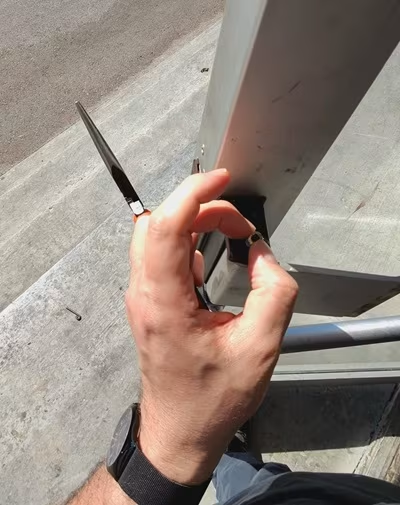
Commercial mortise lock problems
Frequent use can eventually lead to worn latches, loose levers, cylinder problems, inconsistent locking, or internal mechanical wear. Door closers and alignment issues can also affect how commercial mortise hardware performs.
We inspect the opening and determine whether adjustment, repair, cylinder service, or replacement is appropriate.
Mortise Lock Replacement Cost Factors
The cost of mortise lock replacement in Austin varies because mortise systems differ significantly in design, condition, and installation requirements.
Factors that can affect the price
- Complete lock replacement versus cylinder replacement
- Residential or commercial hardware
- Lock brand and configuration
- Condition of the existing lock
- Availability of compatible replacement parts
- Door thickness and preparation
- Amount of fitting or modification required
- Existing trim and hardware
- Strike and door alignment
- Repair work required before installation
- Rekeying or keyed-alike requirements
Older and unusual mortise locks may require additional evaluation because compatible replacement hardware is not always immediately identifiable.
Prices are estimates until the existing lock and door can be inspected. The final price is confirmed before authorized work begins.
Mortise Lock Replacement FAQ
Can you replace a mortise lock without replacing the door?
In many cases, yes. A compatible mortise lock can be fitted into the existing door preparation. The condition and dimensions of the door and mortise pocket determine the available options.
Do I need to replace the whole mortise lock if I lost the key?
Not necessarily. If the lock is functioning properly, rekeying or replacing the cylinder may be enough to make the old key unusable.
Can a mortise lock be rekeyed?
Many mortise cylinders can be rekeyed when they are in suitable condition and use a serviceable cylinder design.
Can just the mortise cylinder be replaced?
Often, yes. If the lock body is working correctly and a compatible cylinder is available, cylinder replacement can establish new key access without replacing the complete lock.
Can an old mortise lock be repaired?
Many older mortise locks can be evaluated for repair. Whether repair makes sense depends on the condition of the internal mechanism and availability of compatible parts.
Can you replace an antique mortise lock?
Replacement options depend on the dimensions and design of the existing hardware. Exact replacements may not always be available, so the door and lock should be evaluated before selecting new hardware.
Can I keep my existing decorative handles and plates?
Sometimes. Whether existing trim can be reused depends on its condition and compatibility with the replacement lock body.
Why does my mortise lock work when the door is open but not when it is closed?
This often indicates a door or strike alignment problem. The latch or deadbolt may be contacting the strike instead of entering it freely.
Why is my mortise lock hard to turn?
The cause may be a worn key, cylinder problem, internal lock wear, deadbolt pressure, or door misalignment. Inspection helps determine which component is responsible.
Can you change a mortise lock after moving into a new home?
Yes. Depending on the condition of the existing hardware, rekeying or cylinder replacement may provide the access change you need without replacing the complete lock.
Can multiple mortise locks use the same key?
Compatible cylinders can often be keyed alike so one key operates several doors.
Can a mortise lock be converted to a regular deadbolt?
Sometimes, but conversion can require substantial door modification because the existing mortise pocket and trim openings remain in the door. The appearance, security, and amount of modification should be considered before converting the hardware.
Do commercial and residential mortise locks work the same way?
They share the basic concept of a lock body installed inside the door, but hardware construction, functions, trim, durability requirements, and door preparation can differ considerably.
Should I buy a replacement mortise lock before calling a locksmith?
It is usually better to identify the existing hardware and measurements first. Mortise locks that appear similar may have different dimensions, functions, handing, or trim requirements.
Why Choose Okey DoKey Locksmith for Mortise Lock Changes?
Okey DoKey Locksmith provides mobile mortise lock service throughout Austin. Because mortise hardware is evaluated at the property, we can inspect the relationship between the lock, door, strike, frame, and existing preparation before deciding what needs to be changed.
Our approach is based on identifying the actual problem rather than automatically replacing the entire lock. Depending on the condition of the hardware, the appropriate solution may be repair, adjustment, rekeying, cylinder replacement, or complete mortise lock replacement.
Careful work on existing doors
Mortise locks are frequently installed in solid wood, older, decorative, and commercial doors where unnecessary modification can create additional problems. We focus on preserving existing door preparation whenever a practical compatible solution is available.
Complete testing after installation
After service, we check key operation, cylinder movement, lever or knob function, latch retraction, deadbolt operation, strike engagement, and door closing.
The lock is tested with the door both open and closed because a mechanism that operates correctly while the door is open can still bind when interacting with a misaligned strike.
Get Mortise Lock Service in Austin
If you need a mortise lock changed, repaired, rekeyed, or evaluated in Austin, Okey DoKey Locksmith provides mobile service directly at your property.
When contacting us, tell us whether the property is residential or commercial, describe the problem, and let us know whether you want to keep the existing appearance of the hardware. Photos of the front of the lock, edge of the door, handles, and existing cylinder can also help identify the system before the visit.
We can inspect the existing mortise hardware and explain whether repair, rekeying, cylinder replacement, or complete mortise lock replacement is the practical solution. The goal is a secure door, smooth operation, proper alignment, and hardware that works reliably in everyday use.
