

Deadbolt Lock Install & Repair Austin TX - Okey DoKey Locksmith
If you need deadbolt installation, replacement, repair, or rekeying in Austin, Texas, Okey DoKey Locksmith provides fully mobile service at your home, rental property, office, or business. We work with single-cylinder deadbolts, double-cylinder deadbolts, high-security locks, keypad deadbolts, and compatible smart deadbolts.
Our locksmith evaluates the complete door rather than looking only at the lock. A deadbolt provides its best protection when the bolt, strike plate, door jamb, mounting hardware, cylinder, and door alignment work together correctly. We install and adjust the hardware so the bolt extends fully without having to lift, push, or force the door.
Mobile deadbolt service is available throughout Austin and nearby areas. Whether you are adding a deadbolt to a door that never had one, replacing worn hardware, rekeying after a move, fixing a deadbolt that will not turn, or upgrading the security of an exterior door, we can evaluate the opening and recommend the appropriate solution.
Contents
- Deadbolt Lock Services in Austin
- Deadbolt Installation
- Deadbolt Replacement
- Deadbolt Repair and Troubleshooting
- Deadbolt Rekeying
- Types of Deadbolt Locks
- Single-Cylinder vs Double-Cylinder Deadbolts
- Deadbolt Grades and Hardware Quality
- What Makes a Deadbolt Secure?
- Will a Deadbolt Fit Your Door?
- Deadbolt Locks vs Mortise Locks
- Residential Deadbolt Applications
- Deadbolts for Landlords and Property Managers
- Deadbolt Installation Process
- Deadbolt Installation and Replacement Cost Factors
- Deadbolt Lock FAQ
- Deadbolt Locksmith Service Area
- Get Help With Deadbolt Locks
Deadbolt Lock Services in Austin
Deadbolts are one of the most common ways to improve the security of an exterior door. Unlike a spring latch, a deadbolt uses a solid bolt that is positively extended into the door frame when the lock is engaged. Properly selected and installed hardware can provide substantially stronger resistance to forced opening than relying on a basic knob or lever latch alone.
Okey DoKey Locksmith provides mobile deadbolt locksmith service throughout Austin, including new deadbolt installation, replacement, repair, adjustment, and rekeying. Because the service is performed at the property, we can evaluate the actual condition of the door, frame, strike, hinges, existing lock preparation, and alignment before recommending a solution.
If you are replacing existing door hardware, you can also review our lock change service. When the existing deadbolt is in good condition and you only need to change which keys operate it, rekeying may be a more practical option than replacing the entire lock.
Common reasons customers call us for deadbolt service
- Installing a deadbolt on a door that does not currently have one
- Replacing an old or damaged deadbolt
- Rekeying after moving into a new home
- Rekeying after tenant turnover
- Lost or stolen keys
- Deadbolt will not turn
- Deadbolt will not fully extend
- Key sticks in the cylinder
- Door must be pushed or pulled before the deadbolt will lock
- Loose or damaged lock hardware
- Upgrading to higher-quality or high-security hardware
- Installing a keypad or smart deadbolt
Deadbolt Installation in Austin
Deadbolt installation means adding a deadbolt to a door that does not already have compatible hardware installed. Unlike simply changing an existing lock, a new installation may require measuring, drilling, boring the door, preparing the door edge, and creating a properly positioned opening in the jamb for the bolt and strike.
Placement and alignment are critical. The deadbolt should extend and retract smoothly without requiring excessive force on the key or thumb-turn. If the bolt repeatedly rubs against the strike, the lock can become difficult to operate and unnecessary stress can be placed on the mechanism.
Installing a deadbolt on an existing exterior door
Before drilling, we inspect the door thickness, backset, existing handle location, door material, frame condition, and available space. The new deadbolt should be positioned so it works independently without interfering with the existing knob, lever, or other hardware.
Deadbolt installation on a new door
A new or replacement door may already contain factory-prepared openings for standard lock hardware. When the preparation matches the selected deadbolt, installation is generally more straightforward. If the opening is not prepared, additional work may be required.
Customer-supplied deadbolts
If you have already purchased a deadbolt, we can inspect the hardware and door for compatibility. Important factors include door thickness, backset, bore dimensions, latch or bolt length, strike configuration, and existing preparation.
A lock should not be forced into an incompatible opening simply because it appears close in size.
Deadbolt Replacement in Austin
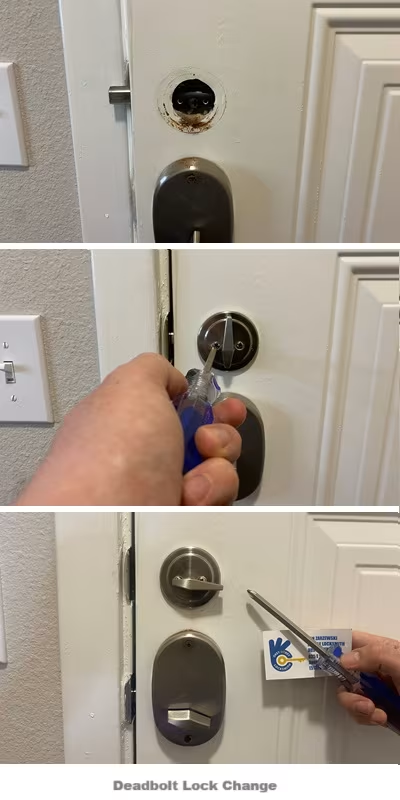
Deadbolt replacement involves removing an existing lock and installing another deadbolt in the same opening when compatible. Customers commonly replace deadbolts because the existing hardware is worn, damaged, unreliable, outdated, or no longer provides the features or security level they want.
Replacing the lock also gives us an opportunity to inspect the strike, door preparation, and alignment. Installing new hardware without correcting an existing alignment problem can cause the new deadbolt to develop the same symptoms as the old one.
When replacement makes sense
- The deadbolt is physically damaged
- The cylinder is badly worn
- Internal components have failed
- The bolt mechanism is unreliable
- The lock is loose or damaged beyond adjustment
- You want a higher-grade deadbolt
- You want a keypad or smart deadbolt
- The existing lock cannot reasonably be rekeyed
- You want different key-control or security features
Deadbolt Repair and Troubleshooting in Austin
A deadbolt that becomes difficult to operate does not automatically need to be replaced. The problem may involve the key, cylinder, bolt mechanism, strike plate, door alignment, hinges, loose mounting hardware, or movement in the door frame.
Our mobile locksmith inspects the complete opening to determine what is preventing normal operation before recommending adjustment, repair, rekeying, or replacement.
Deadbolt will not turn
If the key enters the cylinder but will not turn normally, possible causes include a worn or damaged key, cylinder wear, internal lock failure, or pressure against the bolt caused by door misalignment.
If the thumb-turn works while the exterior key does not, that can also help narrow the problem to the cylinder or key rather than the bolt itself.
Deadbolt only works when you push or pull the door
If you need to push, pull, lift, or lean against the door before the deadbolt will lock, the bolt and strike are usually not lining up correctly.
Door movement, hinge wear, seasonal expansion, frame settling, or a poorly positioned strike can cause the bolt to contact the edge of the opening instead of entering freely.
Deadbolt will not fully extend
A bolt that stops partway may be contacting the strike or jamb, or the mechanism itself may be damaged. The bolt should be able to reach its intended extension without being forced.
Deadbolt is difficult to unlock
Resistance while unlocking may be caused by pressure on the bolt from the door or frame. Before assuming the cylinder is defective, we check whether the deadbolt operates freely while the door is open.
Key sticks in the deadbolt
A key that becomes difficult to insert, turn, or remove may indicate a worn key, damaged cylinder, internal contamination, or cylinder wear. Continuing to force the key can increase the risk of breaking it inside the lock.
Deadbolt turns but the bolt does not move
If the key or thumb-turn rotates but does not properly extend or retract the bolt, an internal connection or lock component may have failed. Depending on the hardware, repair or replacement may be appropriate.
Deadbolt is loose
A loose lock can result from mounting screws backing out, damaged door material, improper installation, or worn hardware. We inspect the mounting points before deciding whether tightening, reinforcement, or replacement is required.
Electronic or smart deadbolt will not lock
Electronic deadbolts can experience many of the same mechanical problems as traditional locks. A motorized deadbolt that repeatedly fails to lock may actually be fighting against a misaligned strike rather than suffering from an electronic failure.
Deadbolt Rekeying in Austin
Rekeying a deadbolt changes the internal key combination so the existing lock operates with a different key. The old key no longer works after the rekey is completed.
When the existing deadbolt is mechanically sound and provides the security level you want, rekeying can be a practical alternative to replacing the entire lock.
When should a deadbolt be rekeyed?
- After moving into a new home
- After a tenant moves out
- When a key is lost
- When a key may have been stolen
- When you do not know who has copies of an existing key
- When contractors or former occupants had access
- When you want compatible locks to operate with the same key
Rekeying vs replacing a deadbolt
Rekeying changes key access while keeping the existing hardware. Replacement installs a different lock.
If the deadbolt is secure, compatible, and working properly, rekeying may be enough. If the hardware is worn, damaged, low quality, unreliable, or you want different features, replacing it may be the better option.
Keying multiple deadbolts alike
Compatible deadbolts can often be keyed alike so the same key operates several locks. This can be useful for homes, rental properties, offices, and other locations where carrying several different keys is inconvenient.
Types of Deadbolt Locks
Deadbolts are available in several configurations. The right choice depends on the door, building use, desired security level, convenience requirements, and whether electronic access is needed.
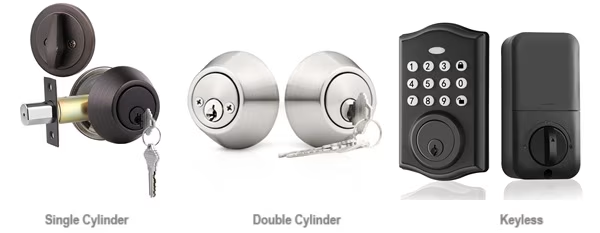
Single-cylinder deadbolts
A single-cylinder deadbolt uses a key cylinder on the exterior and a thumb-turn on the interior. It is one of the most common configurations on residential exterior doors because occupants can unlock the door from inside without locating a key.
Double-cylinder deadbolts
A double-cylinder deadbolt uses a key cylinder on both sides of the door. This design is sometimes considered for doors with glass close enough to the lock that someone could potentially break the glass and reach an interior thumb-turn.
However, requiring a key for interior exit creates important emergency-egress considerations. Double-cylinder hardware should therefore be selected carefully for the particular opening and building use.
Keypad deadbolts
Keypad deadbolts allow authorized users to enter a numeric code rather than relying exclusively on a mechanical key. Depending on the lock, multiple user codes may be available.
Smart deadbolts
Smart deadbolts may add Bluetooth, Wi-Fi, mobile-app access, remote management, temporary credentials, or integration with other connected systems.
The electronic features do not eliminate the need for correct mechanical installation. The bolt still needs to align and move freely.
High-security deadbolts
Higher-security deadbolts may incorporate stronger hardware, improved cylinder designs, reinforced components, enhanced key control, or additional resistance to certain forms of manipulation and forced entry.
Hardware quality should be considered together with the strength of the door and frame rather than evaluated in isolation.
Single-Cylinder vs Double-Cylinder Deadbolts
The difference between single-cylinder and double-cylinder deadbolts is primarily how the interior side operates.
Single-cylinder deadbolt
A single-cylinder lock uses a key from outside and a thumb-turn from inside. This allows fast, keyless interior operation and is therefore common on residential doors.
Double-cylinder deadbolt
A double-cylinder lock requires a key from both sides. This can limit the ability to reach through nearby broken glass and operate an interior thumb-turn.
Why double-cylinder locks need additional consideration
A lock that requires a key for interior exit can create a problem during an emergency if the key is unavailable. For that reason, the appropriate choice depends on the specific door, occupancy, building use, and applicable egress requirements.
In some situations, improving the glass, door, frame, strike, or surrounding security may provide a better solution without requiring keyed interior egress.
Deadbolt Grades and Hardware Quality
Many locks are sold with ANSI/BHMA performance grades that help compare tested durability and security characteristics. Within the traditional Grade 1 through Grade 3 system, Grade 1 generally represents the highest performance level, followed by Grade 2 and Grade 3.
The grade is useful when comparing hardware, but it should not be viewed as the only measure of door security. A high-grade deadbolt installed on a weak, damaged, or poorly reinforced door may not provide the expected level of protection.
Grade 1 deadbolts
Grade 1 hardware is commonly selected when greater durability, frequent use, or higher tested performance is desired. It can be used for commercial applications as well as residential customers seeking more robust hardware.
Grade 2 deadbolts
Grade 2 deadbolts are commonly used for residential applications and can provide a good balance between durability, performance, and cost when installed correctly.
Grade 3 deadbolts
Grade 3 hardware is generally lighter duty. Whether it is appropriate depends on the opening, expected usage, desired security level, and budget.
Grade alone does not secure the door
Even excellent hardware depends on proper installation, full bolt extension, a strong strike, suitable fasteners, a sound door, and a solid frame. All of these components should work together.
What Makes a Deadbolt Secure?
A secure deadbolt is more than a heavy-looking cylinder mounted on a door. The actual resistance of the opening depends on how the deadbolt, bolt, strike, fasteners, door, jamb, frame, cylinder, and installation work together.
Deadbolt throw
The throw is the distance the bolt extends from the lock into the door frame. The strike and jamb need enough clearance for the bolt to reach its intended extension without obstruction.
Strike plate
The strike receives the deadbolt when the door is locked. Its placement and attachment are important because forced-entry pressure is transferred from the bolt into the strike and surrounding frame.
Strike fasteners and frame anchoring
The strike should be secured appropriately for the door-frame construction. Hardware attached only to weak or damaged surface material can limit the strength of the entire opening.
Door jamb and frame condition
A split, damaged, deteriorated, or poorly secured jamb can undermine otherwise strong lock hardware. Security upgrades should consider the condition of the frame as well as the lock.
Door condition
A damaged or structurally weak door can also limit deadbolt performance. The area surrounding the lock should be strong enough to support the installed hardware.
Lock cylinder quality
The cylinder controls keyed access. Cylinder quality, keyway, internal design, and available key-control features vary between products.
Correct alignment
The bolt should extend without scraping against the strike or requiring the door to be pushed into a special position. Proper alignment improves both security and long-term reliability.
Will a Deadbolt Fit Your Door?
Most standard residential exterior doors can use deadbolt hardware, but compatibility should be checked before drilling or ordering a replacement. The door thickness, backset, bore size, edge preparation, frame, door material, and existing hardware all affect installation.
Replacing an existing deadbolt
If the door already has standard deadbolt preparation, replacement is often straightforward when the new hardware uses compatible dimensions.
Adding a new deadbolt
Installing a deadbolt on a door that has never had one requires preparing both the door and jamb. Measurements must be accurate because the bolt and strike need to align after the door is closed.
Wood doors
Many residential wood doors are suitable for standard tubular deadbolts when the door is structurally sound and has sufficient thickness.
Metal doors
Hollow metal doors and other commercial doors may require different preparation, reinforcement, or hardware than a standard residential wood door.
Fiberglass doors
Many fiberglass residential doors are manufactured to accept common lock preparations, but existing reinforcement and manufacturer design should be considered before modifying the door.
Door thickness
Deadbolts are designed for particular door-thickness ranges. Hardware that is too short or too long for the door may not mount or operate correctly.
Backset
The backset is the distance from the door edge to the center of the lock bore. Common hardware may support more than one backset, but compatibility should be confirmed before installation.
Existing mortise hardware
A door already prepared for a mortise lock should be evaluated before additional openings are drilled. Improper modification can interfere with the existing lock body or weaken the door.
Deadbolt Locks vs Mortise Locks
A typical residential deadbolt and a mortise lock secure a door using different types of hardware preparation.
A tubular or cylindrical deadbolt is normally installed through bored openings in the face and edge of the door. The bolt assembly extends from the edge of the door while the cylinder and thumb-turn mount through the larger face bore.
A mortise lock uses a larger rectangular lock body installed inside a pocket, or mortise, cut into the door edge. Mortise hardware is common on many commercial doors, older buildings, multifamily properties, and some higher-end residential doors.
Can a mortise lock be replaced with a deadbolt?
Not automatically. A door already prepared for mortise hardware has a large internal pocket and should be evaluated before changing lock formats. Additional cutting or improper conversion can weaken the door or interfere with existing hardware.
Which one is better?
Neither design is universally better for every opening. A standard residential exterior door may be well suited to a tubular deadbolt, while a commercial or mortise-prepared door may be better served by compatible mortise hardware.
Residential Deadbolt Applications
Residential deadbolts are commonly installed on front doors, back doors, side entrances, and doors connecting an attached garage to the living area. Each opening should be evaluated according to its construction and use.
Front door deadbolts
The front entrance is often the primary location for a residential deadbolt. Customers may choose traditional keyed hardware, keypad access, smart deadbolts, or higher-security cylinders depending on their needs.
Back and side doors
Less visible entrances should not be ignored. A strong front door does little to protect a home if another exterior door has weak or damaged locking hardware.
Garage entry doors
The door connecting a garage to the home is frequently used and may experience substantial wear. Smooth alignment and durable hardware are especially important on doors used many times each day.
Deadbolt upgrades after moving
Moving into a new home is a common reason to rekey or replace deadbolts. If the existing hardware is good, rekeying can prevent old keys from working without replacing the lock itself.
Keyed and smart deadbolts
Homeowners can choose between traditional mechanical access and electronic options. A smart deadbolt can add convenience, but mechanical alignment, strike strength, and door condition remain just as important as they are with a conventional lock.
Deadbolts for Landlords and Property Managers
Okey DoKey Locksmith works with Austin landlords and property managers who need deadbolt rekeying, replacement, repair, installation, and multi-door lock service. Tenant turnover is one of the most common reasons to change key access without replacing the entire door.
Deadbolt rekeying between tenants
When compatible hardware remains in good condition, rekeying can establish a new key combination so keys from a previous tenancy no longer operate the lock.
Replacing damaged rental-property locks
Locks that are worn, loose, damaged, or unreliable may be better candidates for replacement than rekeying. We inspect the condition of the hardware before recommending either option.
Keying multiple deadbolts alike
Compatible locks may be keyed alike so one key operates several doors. This can simplify access for a house, duplex, office, maintenance team, or other managed property.
Standardizing lock hardware
Using compatible lock families across multiple properties or units can simplify future rekeying, key management, replacement, and maintenance.
Multiple deadbolts during one visit
If several doors need authorized service, tell us the number of locks and type of property when scheduling. This helps us prepare appropriate hardware and estimate the scope of the visit.
Deadbolt Installation Process
Professional deadbolt installation involves more than attaching a lock to the door. The hardware and surrounding opening need to operate together correctly.
1. Inspect the door and frame
We inspect the door thickness, material, alignment, hinges, existing preparation, frame condition, and current hardware.
2. Confirm hardware compatibility
The deadbolt is checked for compatible backset, door-thickness range, bore requirements, and intended application.
3. Prepare the door when necessary
For a new installation, the door is measured and prepared for the deadbolt according to the required dimensions.
4. Prepare and align the strike
The strike is positioned so the bolt can extend freely into the jamb without scraping or stopping short.
5. Install the deadbolt
The cylinder, bolt assembly, thumb-turn, and related hardware are installed and tightened correctly without distorting the mechanism.
6. Test with the door open
The bolt is operated while the door is open to confirm that the lock itself works freely.
7. Test with the door closed
The door is then closed and the lock tested repeatedly to confirm that alignment remains correct under actual operating conditions.
8. Test all keys and access methods
Mechanical keys, keypads, smart-lock functions, or other access methods are tested when applicable.
Deadbolt Installation and Replacement Cost Factors
The cost of deadbolt service in Austin depends on the hardware, door, and work required. Replacing a deadbolt in an existing compatible opening is different from drilling and preparing a door that has never had a deadbolt.
Factors that can affect the price
- Service call
- Deadbolt installation, replacement, repair, or rekeying
- Single-cylinder or double-cylinder hardware
- Mechanical, keypad, electronic, or smart deadbolt
- Hardware grade and security level
- Whether the customer supplies the lock
- Existing door preparation
- Door material and thickness
- Backset and bore compatibility
- Strike and door-frame condition
- Additional drilling or modification
- Door or hinge alignment problems
- Additional reinforcement work
- Number of deadbolts being serviced
- Rekeying or keyed-alike requirements
Prices are estimates until the door and hardware can be inspected. The final price is confirmed before authorized work begins.
Deadbolt Lock FAQ
Can a locksmith install a deadbolt on a door that does not have one?
Yes, many suitable residential doors can be prepared for a new deadbolt. The door thickness, material, frame, backset, existing hardware, and intended placement should be inspected before drilling.
Can you replace an existing deadbolt?
Yes. If the existing preparation is compatible, an old or damaged deadbolt can often be removed and replaced without major modification to the door.
Can a deadbolt be rekeyed instead of replaced?
Many mechanical deadbolts can be rekeyed when the hardware remains in good condition and the cylinder design supports rekeying.
Should I rekey or replace my deadbolt after moving?
If the existing hardware is secure and functioning correctly, rekeying may be enough to prevent old keys from operating it. Replacement may be preferable when the deadbolt is worn, damaged, low quality, unreliable, or you want different features.
Why won't my deadbolt lock unless I push the door?
This often indicates misalignment between the bolt and strike. Door sag, hinge movement, seasonal expansion, or frame movement can shift the opening over time.
Why won't my deadbolt fully extend?
The bolt may be contacting the strike or jamb, or the lock mechanism itself may be damaged. The cause should be identified rather than forcing the key or thumb-turn.
Why is my deadbolt difficult to turn?
Possible causes include a worn key, damaged cylinder, internal lock wear, door pressure, bolt resistance, or strike misalignment.
Why does my deadbolt work when the door is open but not when it is closed?
This strongly suggests an alignment problem between the bolt and the strike or jamb rather than a problem inside the lock itself.
Is a deadbolt better than a regular door-handle lock?
A deadbolt generally provides stronger resistance to forced opening than a basic spring latch because the bolt is positively extended into the door frame rather than held in place by spring pressure.
Is a Grade 1 deadbolt better than Grade 2?
Grade 1 generally represents a higher tested performance level within the traditional ANSI/BHMA Grade 1–3 system. However, hardware grade is only one part of door security. Installation, strike attachment, frame strength, and door condition also matter.
Should every exterior door have a deadbolt?
Many exterior residential doors benefit from properly selected deadbolt hardware, but the appropriate lock depends on door construction, usage, existing hardware, and applicable egress considerations.
Are double-cylinder deadbolts more secure?
They can reduce the ability to reach through nearby broken glass and turn an interior thumb-turn, but requiring a key for interior exit creates safety and egress concerns. The appropriate choice depends on the particular opening.
Can you key several deadbolts to the same key?
Often, yes, when the cylinders and keyways are compatible. Keying locks alike can simplify access for homeowners, landlords, property managers, and businesses.
Can you install a smart deadbolt?
Yes, many keypad and smart deadbolts can replace compatible mechanical deadbolts. Correct door alignment is particularly important because the electronic motor should not have to force the bolt against the strike.
Why does my smart deadbolt keep saying it is jammed?
A jam warning can be caused by the bolt rubbing against the strike, door misalignment, excessive resistance, incorrect installation, weak batteries, or an internal lock problem.
Can a deadbolt be installed on a metal door?
Many metal doors can use deadbolt hardware, but the preparation, reinforcement, and appropriate lock may differ from those used on a typical residential wood door.
Can you install a deadbolt on a fiberglass door?
Many fiberglass doors can accept standard lock hardware when the door is designed and reinforced for it. The existing preparation and door construction should be checked before modification.
What is the difference between a deadbolt and a mortise lock?
A typical tubular deadbolt uses bored openings through the door and a separate bolt assembly in the edge. A mortise lock uses a larger lock body installed inside a rectangular pocket cut into the door edge.
Can you repair a loose deadbolt?
Sometimes. The cause may be loose mounting screws, worn hardware, damaged door material, or incorrect installation. We inspect the lock before determining whether tightening, reinforcement, repair, or replacement is appropriate.
Can a deadbolt be repaired after an attempted break-in?
That depends on the damage. The deadbolt, strike, door, jamb, frame, and surrounding material should all be inspected because replacing only the cylinder may not restore the security of a damaged opening.
How long does deadbolt installation take?
Many installations can be completed during one service visit. The time required depends on whether an existing opening is already prepared, door material, alignment, hardware, and any additional modification or reinforcement required.
Mobile Deadbolt Locksmith Service Around Austin
Okey DoKey Locksmith provides mobile deadbolt installation, replacement, repair, and rekeying throughout Austin and nearby areas. Service is performed at the property so the lock can be evaluated and tested under real door and frame conditions.
We work with homeowners, landlords, rental properties, property managers, offices, and businesses. When scheduling, tell us whether you need a new installation, replacement, repair, or rekeying and whether the door currently has a deadbolt.
If you already purchased the hardware, providing the deadbolt brand or model and a description of the door can also help us prepare for the visit.
Get Help With Deadbolt Locks in Austin
If you need deadbolt installation, deadbolt replacement, deadbolt repair, or deadbolt rekeying in Austin, Texas, Okey DoKey Locksmith provides professional mobile service at your property.
Tell us what type of door you have, what deadbolt is currently installed, and what you want to accomplish. If the lock is malfunctioning, let us know whether the key will not turn, the bolt will not extend, the door needs to be pushed before locking, or another problem is occurring.
Our goal is to provide proper hardware selection, accurate installation, smooth bolt operation, dependable key access, and a deadbolt that works correctly with the complete door and frame rather than treating the lock as an isolated piece of hardware.
