

Panic Bar installation Austin TX - Okey DoKey Locksmith
If you need panic bar installation in Austin, Texas, Okey DoKey Locksmith provides fully mobile, on-site service for commercial exit devices, panic hardware, fire exit hardware, push bars, vertical-rod systems, alarmed exit devices, and related commercial door hardware. We work with offices, retail properties, restaurants, schools, churches, warehouses, medical facilities, apartment common areas, and other authorized commercial properties.
A panic bar is part of the complete exit-door system, not simply a bar mounted across the door. Reliable operation depends on the exit device, latch, strike, door, frame, hinges, closer, and exterior trim working together correctly. We inspect the complete opening before recommending installation, repair, or replacement.
Panic and fire exit hardware can also be subject to building, fire, accessibility, and egress requirements depending on the property and door. Our focus is easy interior release, dependable latching, correct door operation, durable commercial hardware, and an installation appropriate for the actual opening.
Contents
- Panic Bar Installation in Austin
- What Is a Panic Bar?
- Panic Bar, Exit Device, and Fire Exit Hardware
- When Is Panic Hardware Required?
- Types of Panic Bars and Exit Devices
- Doors That Can Use Panic Hardware
- Rim Exit Devices
- Vertical Rod Exit Devices
- Fire Exit Hardware
- Install, Repair, or Replace a Panic Bar?
- Common Panic Bar Problems
- Panic Bars and Door Closers
- Exterior Entry and Lever Trim
- Panic Bars and Access Control
- Egress and Life-Safety Considerations
- How Panic Bar Installation Works
- Commercial Properties We Service
- Panic Bar Installation Cost Factors
- Panic Bar FAQ
- Why Choose Okey DoKey Locksmith?
- Austin Panic Bar Service Area
- Get Panic Bar Service
Panic Bar Installation in Austin
Okey DoKey Locksmith provides commercial panic bar installation throughout Austin as part of our mobile commercial locksmith service. We install and service exit devices directly at the property so the hardware can be evaluated together with the actual door, frame, strike, closer, and exterior access requirements.
New panic hardware may be needed during construction, renovation, a change in door use, replacement of failed exit hardware, or correction of an existing door that does not operate properly.
Panic bar services may include
- New panic bar installation
- Exit device replacement
- Panic bar repair
- Latch and strike adjustment
- Rim exit device installation
- Vertical rod exit devices
- Fire exit hardware
- Alarmed exit devices
- Exterior lever or pull trim
- Keyed exterior access
- Electric strike integration
- Electronic access-control integration
- Door closer troubleshooting
- Commercial exit-door alignment
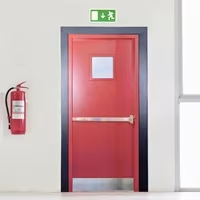
What Is a Panic Bar?
A panic bar is door-mounted exit hardware designed to unlatch a door when an occupant pushes a horizontal actuating portion of the device from the egress side.
The basic purpose is simple: occupants should be able to release the door without searching for a key or performing a complicated locking procedure.
Push-pad operation
Many modern exit devices use a horizontal push pad rather than a full tubular crossbar. Pressing the pad retracts the latch mechanism so the door can open.
Latch mechanism
Depending on the device, the door may secure with a rim latch, vertical rods, or another listed exit-device configuration.
Exterior side of the door
The outside can be configured differently from the inside. Exterior entry may use a lever, pull, key cylinder, card reader, electric strike, or another compatible method while interior egress remains available through the exit device.
Panic Bar, Exit Device, and Fire Exit Hardware
These terms are often used interchangeably in everyday conversation, but there are useful distinctions.
Exit device
“Exit device” is a broad industry term for door hardware that releases a door from the egress side using a push bar or push pad.
Panic hardware
Panic hardware is listed hardware intended for applicable means-of-egress doors. The 2024 International Building Code requires panic hardware to be listed in accordance with UL 305 where panic hardware is required.
Fire exit hardware
Fire exit hardware is panic-style hardware intended for use on fire door assemblies. Where required, the 2024 IBC calls for fire exit hardware listed in accordance with UL 10C and UL 305.
Why the distinction matters
A standard panic device should not automatically be substituted for listed fire exit hardware on an opening where the fire-door assembly requires fire exit hardware.
When Is Panic Hardware Required?
Not every commercial door automatically requires a panic bar. The requirement depends on factors such as the occupancy classification, occupant load, room use, door location, and applicable building and fire codes.
Assembly and educational occupancies
Under the 2024 International Building Code, swinging doors serving rooms or spaces with an occupant load of 50 or more in Group A or Group E occupancies generally cannot have a latch or lock other than panic hardware or fire exit hardware, subject to specified exceptions.
High-hazard occupancies
Swinging doors serving Group H occupancies are also included in the panic-hardware provisions.
Certain refrigeration machinery rooms
The code contains specific panic-hardware requirements for certain larger refrigeration machinery rooms.
Certain electrical equipment rooms
Some transformer vaults, battery or energy-storage rooms, modular data centers, and electrical-equipment rooms are subject to separate panic or fire exit hardware requirements.
Existing commercial buildings
Existing-building requirements can differ depending on the scope of renovation, occupancy, work area, and existing conditions. The applicable opening should be evaluated rather than assuming a rule based only on the business type.
Inspection corrections
If a property receives an inspection correction involving exit hardware, we can evaluate the door and existing hardware so the requested work can be understood before replacement equipment is selected.
Types of Panic Bars and Exit Devices
Commercial exit devices come in several configurations. The correct type depends on the door, frame, pair arrangement, fire rating, desired exterior access, and existing preparation.
Rim exit devices
Rim devices use a latch mounted on the surface of the door and a corresponding strike on the frame or mullion.
Surface vertical rod devices
Vertical rods run along the face of the door and latch at the top, bottom, or both depending on the hardware configuration.
Concealed vertical rod devices
Concealed rod systems place much of the vertical-rod hardware inside the door for a cleaner appearance.
Mortise exit devices
Some commercial exit hardware operates a mortise lock body installed inside the door. These systems require compatible door preparation and lock functions.
Fire exit devices
Fire-rated openings may require listed fire exit hardware rather than ordinary panic hardware.
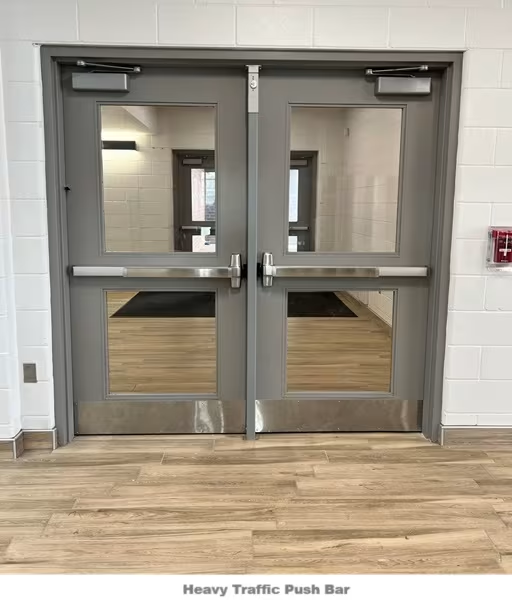
Doors That Can Use Panic Hardware
Panic hardware should be matched to the physical door and frame rather than chosen solely by width.
Hollow metal doors
Hollow metal commercial doors commonly support many types of exit hardware. Existing reinforcement and preparation should be checked before installation.
Aluminum storefront doors
Narrow-stile aluminum doors can require hardware specifically designed for limited mounting surfaces and storefront construction.
Wood commercial doors
Solid-core commercial wood doors may support panic hardware when the door construction and reinforcement are appropriate.
Pairs of doors
Double doors can require more planning because the active and inactive leaves, mullion, vertical rods, coordinators, fire rating, and required egress width can affect the hardware configuration.
Fire-rated doors
Listed fire-door assemblies should be evaluated carefully before drilling, modifying, removing hardware, or selecting a replacement exit device.
Rim Exit Devices
A rim exit device uses a surface-mounted latch at the edge of the door rather than rods extending vertically through or along the door.
Rim devices are common because they can provide straightforward mechanical operation and can work with several exterior-access configurations.
Single doors
Rim exit devices are frequently used on compatible single commercial doors.
Pairs with a removable mullion
Some pairs of doors use rim devices that latch into a center mullion. The correct configuration depends on how the opening is designed and used.
Exterior trim
A rim device may be paired with a compatible keyed lever, pull trim, electrified trim, or other exterior-entry hardware.
Vertical Rod Exit Devices
Vertical-rod devices secure a door using rods that extend toward the top, bottom, or both portions of the opening.
Surface vertical rods
Surface-mounted rods remain visible on the face of the door and can simplify access to some service components.
Concealed vertical rods
Concealed rods are installed inside compatible doors, providing a cleaner appearance but requiring more specialized preparation and servicing.
Double-door applications
Vertical rod systems are often encountered on pairs of doors where each leaf needs independent latching without a fixed center mullion.
Alignment is especially important
The upper and lower latches must align correctly with their strikes. Door sag, floor movement, frame movement, or adjustment problems can prevent reliable latching.
Fire Exit Hardware
A fire-rated exit door may require fire exit hardware rather than ordinary panic hardware.
Fire exit hardware is not simply a panic bar with a label
The device is part of a listed fire-door assembly and needs to be compatible with the door, frame, latch requirements, and applicable listing.
Positive latching
Fire doors generally rely on appropriate latching as part of the assembly. Exit hardware used on these openings must preserve the required function.
Dogging considerations
Some ordinary panic devices can be mechanically “dogged” or held retracted for convenience. Fire exit hardware is subject to different requirements because the door needs to latch as part of its fire-protection function.
Existing fire doors
Modifications to listed fire door assemblies should not be improvised. Existing labels and hardware should be identified before drilling or replacing components.
Install, Repair, or Replace a Panic Bar?
A malfunctioning exit door does not automatically require a new panic device. The problem can involve the device, latch, strike, rods, door closer, hinges, door alignment, frame, or another component.
New installation
A new panic bar may be needed when an appropriate exit device is being added to a compatible opening or when a door is being converted as part of an approved project.
Repair
Repair or adjustment may be appropriate when the device remains serviceable but a component is loose, worn, or out of alignment.
Replacement
Replacement may make more sense when the device is badly worn, damaged, incomplete, incompatible with the opening, or no longer serviceable.
Door problem rather than device problem
If a panic bar works with the door open but not when the door closes, alignment should be investigated before replacing the exit device.
Common Panic Bar Problems
Panic hardware is used repeatedly and can develop several recognizable symptoms.
Panic bar sticks when pushed
A sticking push pad may involve internal wear, dirt, mechanical damage, or pressure on the latch.
Bar moves but door stays latched
The device may not be retracting its latch or rods completely, or the latching components may be binding against the strikes.
Door will not latch after closing
This can involve the panic device, strike, vertical rods, closer, hinges, or general door alignment.
Door must be pushed or pulled to latch
Needing to force the door into position is a strong sign that the opening should be checked for alignment.
Push pad is loose
Loose mounting or internal components can develop after heavy use and should be corrected before additional damage occurs.
Exterior lever does not open the door
The problem may involve the trim, cylinder, spindle, clutch, linkage, electric function, or exit device itself.
Vertical rods do not latch consistently
Rod adjustment, door sag, strike movement, or worn internal components can interfere with top or bottom latching.
Panic Bars and Door Closers
A properly functioning exit device still depends on the door returning to the closed position. This makes the door closer an important part of many commercial openings.
Door does not close completely
If the closer stops the door before the latch reaches the strike, the panic device cannot secure the opening correctly.
Door slams
Excessive closing speed can create wear, noise, and impact on the exit hardware and frame.
Weak final latching action
The final portion of closer travel needs to provide enough controlled movement for compatible latching without creating excessive impact.
For more information, see our door closer installation service.
Exterior Entry and Lever Trim
A panic bar controls exit from the inside, but many doors also need authorized entry from outside.
Keyed lever trim
Compatible exterior lever trim can allow authorized users to enter while the interior exit device continues to provide egress.
Pull trim
Some exit-only doors use a pull on the exterior without providing ordinary entry.
Night-latch function
Certain exit-device configurations use a key cylinder to retract the latch for authorized entry.
Electrified trim
Some compatible exit devices can use electrically controlled exterior trim as part of an access-control system.
Function matters
Exterior trim should be selected based on the intended operation of the door rather than simply choosing a lever that physically attaches to the device.
Egress and Life-Safety Considerations
A panic bar is life-safety hardware, so installation should be based on the actual opening rather than a generic assumption that any push bar will make a door compliant.
Listed hardware
Where panic hardware is required under the applicable 2024 IBC provisions, panic hardware is listed in accordance with UL 305. Fire exit hardware is listed in accordance with UL 10C and UL 305.
Actuating portion
The 2024 IBC requires the actuating portion of required panic or fire exit hardware to extend at least one-half of the door leaf width.
Unlatching force
The code also limits the force required to unlatch required panic or fire exit hardware.
Fire-rated openings
Listed fire doors should retain hardware appropriate to the fire-door assembly. Existing fire exit hardware, closers, and fire-door components should not be modified casually.
Electrically locked doors
Electronic locking can introduce additional requirements. For example, the 2024 IBC includes separate provisions for door-hardware release and sensor-release electrically locked egress doors.
Austin code environment
Austin currently uses the 2024 International Building Code and 2024 International Fire Code with local amendments. The exact requirements for a particular door depend on the occupancy, occupant load, building configuration, opening, and project scope.
When code compliance or an inspection correction is involved, the applicable requirement should be confirmed for the specific property rather than assuming that a particular product alone guarantees compliance.
How Panic Bar Installation Works
1. Inspect the door and frame
We identify the door material, width, handing, frame, existing lock preparation, hinges, closer, and current hardware.
2. Determine the required door function
We clarify how occupants should exit and whether exterior entry is required by key, lever, or another method.
3. Identify existing fire or egress considerations
Existing labels, fire exit hardware, occupancy-related requirements, and other relevant conditions are considered before hardware is selected.
4. Select compatible exit hardware
The panic or exit device is matched to the physical opening and intended operation.
5. Prepare and mount the device
The hardware is installed according to the door preparation and manufacturer's installation requirements.
6. Install and align the strike
The latch or rods must engage the appropriate strikes without excessive force.
7. Install exterior trim if required
Compatible lever, pull, cylinder, or entry hardware is added according to the desired function.
8. Check the door closer
The door must return fully to the latched position after use.
9. Test interior release
The panic device is operated repeatedly to confirm smooth and dependable unlatching.
10. Test closing and relatching
The door is cycled repeatedly to confirm that it closes, latches, and secures consistently.
11. Test exterior entry
If keyed or entry is provided, that function is tested separately.
Commercial Properties We Service
Okey DoKey Locksmith provides panic bar and exit-device service for many types of Austin commercial and multi-user properties.
- Retail stores
- Restaurants
- Bars and entertainment venues
- Office buildings
- Medical and dental offices
- Warehouses
- Industrial facilities
- Schools and educational properties
- Churches and religious facilities
- Apartment common areas
- Condominium buildings
- Multi-tenant commercial properties
- Commercial kitchens
- Assembly spaces
- Storage and equipment rooms
Panic Bar Installation Cost Factors
The cost of panic bar installation in Austin depends on the exit device, door, frame, existing preparation, and additional hardware required.
Factors that can affect the price
- Service call
- New installation vs repair or replacement
- Rim vs vertical rod vs mortise exit device
- Panic hardware vs fire exit hardware
- Single door vs pair of doors
- Door material
- Door width and existing preparation
- Existing holes or previous hardware
- Strike preparation
- Door and frame alignment
- Door closer condition
- Exterior lever or pull trim
- Key cylinder requirements
- Alarmed exit hardware
- Electric strike integration
- Access-control integration
- Fire-rated opening requirements
- Additional door modifications
Prices are estimates until the door and existing hardware can be inspected. The final price is confirmed before authorized work begins.
Panic Bar FAQ
What is a panic bar?
A panic bar is door-mounted exit hardware that releases the latch when the user pushes the bar or push pad from the egress side.
Is a panic bar the same as an exit device?
“Exit device” is commonly used as the broader hardware term. Panic hardware is listed exit hardware used where panic hardware is required.
Is panic hardware required on every commercial exit door?
No. Requirements depend on occupancy classification, occupant load, room use, door location, and other applicable code provisions.
When is panic hardware commonly required?
Under the 2024 IBC, examples include certain doors serving Group H occupancies and rooms or spaces with an occupant load of 50 or more in Group A or E occupancies, subject to the applicable provisions and exceptions.
What is fire exit hardware?
Fire exit hardware is panic-style exit hardware listed for use on applicable fire door assemblies.
Can ordinary panic hardware be installed on a fire-rated door?
A fire-rated opening should use hardware appropriate to its listing and required function. Ordinary panic hardware should not automatically be substituted for required fire exit hardware.
Can you install a panic bar on an existing door?
Often, yes, if the door, frame, construction, and intended application are compatible with the selected hardware.
Can you install a panic bar on an aluminum storefront door?
Many compatible storefront doors can use exit hardware designed for narrow-stile construction.
Can you install a panic bar on double doors?
Yes, many pairs of doors use rim or vertical-rod exit devices. The appropriate configuration depends on the opening.
Can you repair a panic bar?
Many problems can be repaired or adjusted depending on the condition of the device and availability of compatible components.
Why does my panic bar stick?
Possible causes include internal wear, latch pressure, dirt, damaged components, door sag, or strike misalignment.
Why does my door not latch after I release the panic bar?
The problem may involve the device, latch, rods, strike, hinges, closer, or door alignment.
Why does the panic bar work when the door is open but not closed?
This commonly indicates that the latch or rods are binding against the strike rather than a failure of the release mechanism itself.
Can a panic bar have a lock on the outside?
Compatible exterior trim can provide keyed or electronically controlled entry while preserving interior egress through the exit device.
Can a card reader work with a panic bar?
Yes, compatible access-control hardware can provide controlled exterior entry while the exit device remains available from the egress side.
Can an electric strike work with a panic bar?
Some rim and latch-based exit devices can work with compatible electric strikes when the door and system are properly designed.
Can a magnetic lock be used with panic hardware?
Some electrically locked openings combine electromagnetic locking with appropriate door-mounted release hardware, but the complete egress system must be configured for the applicable opening.
Does a panic bar need a door closer?
Not every situation is identical, but many commercial exit doors use closers so the door returns to the closed and latched position after use.
Can a panic bar be alarmed?
Yes. Alarmed exit devices can provide an audible warning when the door is opened without preventing required egress.
Can a panic bar be held open?
Some non-fire-rated exit devices have dogging features that can hold the latch retracted. Fire exit hardware and certain other openings are subject to different restrictions.
Can you replace an old panic bar without replacing the door?
Often, yes. Compatibility with the existing door preparation, holes, strike, trim, and required function needs to be checked first.
Does installing a panic bar guarantee code compliance?
No. Compliance depends on the complete opening and may involve occupancy, occupant load, door swing, hardware listing, accessibility, fire rating, electrical locking, and other building conditions.
How much force should it take to operate panic hardware?
Required panic or fire exit hardware is subject to applicable limits on unlatching force. The actual installed opening should be evaluated under the applicable code and hardware listing.
Why Choose Okey DoKey Locksmith for Panic Bar Service?
Okey DoKey Locksmith provides mobile panic bar and commercial exit-device service throughout Austin. Because service is performed at the property, we can inspect the actual relationship between the exit device, door, frame, strike, closer, exterior trim, and access-control equipment.
Complete door evaluation
We do not assume that every exit-door problem is caused by the panic bar itself. Door sag, strike movement, closer problems, loose hinges, and frame alignment can all affect operation.
Testing before completion
We test push-pad operation, latch retraction, closing, relatching, exterior entry when applicable, and related door hardware before completing the service.
Panic Bar Service Around Austin
Okey DoKey Locksmith provides panic bar installation, repair, and replacement throughout Austin and nearby areas. Service is available for authorized commercial properties, offices, retail stores, restaurants, warehouses, schools, churches, apartment common areas, and other compatible openings.
When contacting us, tell us what type of property you have, whether the door is single or double, what hardware is currently installed, and what problem you are trying to solve.
Photos of the inside of the door, outside trim, door edge, frame, strike, existing panic device, closer, and any fire-door labels can help us understand the opening before the service visit.
Get Panic Bar Installation in Austin
If you need panic bar installation, panic bar repair, or exit-device replacement in Austin, Texas, Okey DoKey Locksmith provides professional mobile service directly at your commercial property.
We can evaluate the door, frame, existing exit hardware, closer, exterior entry requirements, fire-rating considerations, and access-control components before recommending a practical solution.
Our goal is to provide easy interior release, dependable latching, proper door closing, durable commercial hardware, and an exit system appropriate for the way your Austin property is actually used.
