

Car Ignition Repair Austin Texas - Okey DoKey Locksmith
If your car key will not turn, gets stuck in the ignition, breaks inside the cylinder, or the vehicle will not start because of an ignition-related problem, Okey DoKey Locksmith provides mobile ignition repair and replacement in Austin, Texas. We come directly to your vehicle at home, work, a parking area, or another accessible location so many ignition problems can be evaluated without towing.
Ignition problems can involve more than one component. A worn key, damaged ignition cylinder, internal wafers, steering-lock pressure, electrical switch problem, transponder issue, or immobilizer fault can create similar symptoms. Our first step is to determine whether the problem is actually the key, mechanical ignition, electronic security system, or a combination of these before recommending repair or replacement.
Mobile ignition service is available throughout Austin and nearby areas for supported vehicles. We focus on accurate diagnosis, careful repair, correct key operation, and reliable starting rather than replacing an ignition simply because the vehicle will not start.
Contents
- Ignition Repair and Replacement in Austin
- Understanding the Ignition System
- Common Ignition Problems
- Key Will Not Turn in the Ignition
- Key Stuck in the Ignition
- Broken Key in the Ignition
- Ignition Turns but Vehicle Will Not Start
- Security Light and Immobilizer Problems
- Worn Key vs Worn Ignition Cylinder
- Ignition Repair vs Ignition Replacement
- Rekeying or Matching the Ignition to the Existing Key
- On-Site Mobile Ignition Service
- How the Ignition Service Process Works
- Ignition Repair Cost Factors
- Ignition Repair FAQ
- Why Choose Okey DoKey Locksmith?
- Austin Ignition Repair Service Area
- Get Help With an Ignition Problem
Ignition Repair and Replacement in Austin
Okey DoKey Locksmith provides automotive ignition repair in Austin for supported cars, trucks, SUVs, and vans. Because the service is mobile, the ignition can be evaluated where the vehicle is located instead of automatically towing the car to a repair facility.
Some ignition problems are mechanical and can be addressed by an automotive locksmith. Others involve electrical, immobilizer, steering-column, or vehicle-control systems that may require another type of automotive repair. Correctly identifying the problem prevents unnecessary ignition replacement.
Ignition-related services may include
- Key will not turn in the ignition
- Key difficult to insert or remove
- Key stuck in the ignition
- Broken key extraction
- Worn ignition cylinder
- Damaged ignition lock cylinder
- Ignition cylinder repair
- Ignition cylinder replacement
- Key and ignition compatibility problems
- Replacement key after ignition service
- Selected immobilizer and transponder-key troubleshooting
Understanding the Automotive Ignition System
The word “ignition” can refer to several different components, which is one reason diagnosis matters before parts are replaced.
Ignition lock cylinder
The ignition lock cylinder is the mechanical component into which a traditional key is inserted. Internal wafers or similar locking components recognize the mechanical cuts of the key and allow the cylinder to rotate when the correct key is used.
Ignition switch
The ignition switch is an electrical component involved in changing vehicle power states and starting operation on many vehicles. Depending on the design, it may be connected to or actuated by the mechanical lock cylinder.
Transponder and immobilizer system
Many vehicles also require electronic authorization before the engine can start. A mechanically correct key may turn the ignition but still fail to start the vehicle if its transponder is not recognized.
For more information, see What Is Transponder Key?.
Steering-lock components
Some vehicles use mechanical or electronic steering-lock systems that can affect key or ignition operation. Pressure against a steering lock can sometimes make a normal ignition feel stuck.
Push-button-start vehicles
Vehicles with push-button start do not use a traditional keyed ignition cylinder for normal starting, but they still depend on electronic key authorization, start controls, and related vehicle systems.
Common Ignition Problems We Evaluate
Ignition problems can develop gradually or appear suddenly. Recognizing early symptoms can help prevent a situation where the key can no longer operate the vehicle at all.
Key becomes harder to turn
If a key that once turned smoothly gradually becomes difficult to rotate, the cause may be wear in the key, ignition cylinder, internal components, or steering-lock pressure.
Key works only when moved or jiggled
A key that requires repeated movement before turning can indicate wear. Continued forcing may eventually damage the key or ignition.
Key will not insert fully
A damaged key, debris, internal cylinder problems, or a broken fragment inside the ignition may prevent full insertion.
Key turns farther than normal
Unusual free movement can indicate an internal mechanical problem or a failed connection between ignition components.
Ignition feels loose
Movement in the cylinder or surrounding hardware can indicate wear or mounting problems that should be evaluated before complete failure occurs.
Key Will Not Turn in the Ignition
A key that will not turn in the ignition is one of the most common automotive locksmith complaints. The correct key may be present, but a mechanical condition prevents normal rotation.
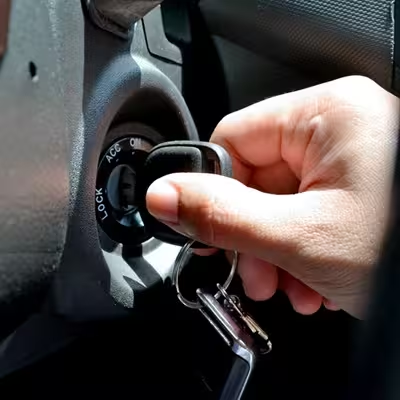
Worn car key
Years of use can round or wear the cuts of a mechanical key. The key may still work intermittently even though it no longer positions the internal ignition components correctly every time.
Worn ignition components
The internal components of an ignition cylinder can also wear. In that situation, even a correctly cut key may become difficult to turn.
Steering-wheel pressure
If the steering wheel is loaded against the steering-lock mechanism, the ignition may feel locked. Relieving that pressure can sometimes restore normal operation when no mechanical failure is present.
Damaged or bent key
A bent or damaged key should not be forced into the ignition. Doing so can damage the cylinder or cause the key to break inside.
Why forcing the key is risky
Excessive twisting can break the key, damage internal wafers, or turn a repairable ignition problem into a more complicated replacement job.
Key Stuck in the Ignition
A key that enters and turns but will not come back out can indicate a different problem from a key that will not turn at all.
Ignition cylinder wear
Internal wear can prevent the cylinder from returning to the exact position needed for key removal.
Key wear or damage
A distorted or heavily worn key can bind inside the cylinder.
Vehicle not fully in the required position
On some vehicles, the key-release system interacts with the transmission selector or other vehicle controls. A problem elsewhere in the system can sometimes affect key removal.
Do not pull excessively on the key
Strong pulling or twisting can break the key or damage the ignition. If normal operation does not release it, the cause should be inspected.
Broken Key Extraction From the Ignition
A broken key inside the ignition can prevent the vehicle from starting and can obstruct the lock cylinder. The fragment should be removed carefully rather than pushed deeper into the mechanism.
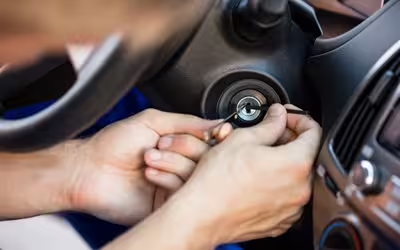
Why ignition keys break
Common contributing factors include worn keys, bending, cracks, repeated force, deep key cuts, or an ignition that has become increasingly difficult to operate.
Can the broken piece be removed without replacing the ignition?
In many situations, yes. Whether extraction alone solves the problem depends on the condition of the cylinder and why the key broke.
Inspecting the ignition after extraction
Once the fragment is removed, we check whether the cylinder operates normally with a proper key or whether internal wear contributed to the breakage.
Replacing the key
A new key may be required after extraction. If the old key was badly worn, simply copying its worn shape may not be the best approach.
Ignition Turns but the Vehicle Will Not Start
If the key turns normally but the engine does not start, the problem may not be a mechanical ignition-cylinder failure.
Transponder key not recognized
On immobilizer-equipped vehicles, the mechanical key and electronic authorization perform different functions. The key can physically turn while the vehicle refuses starting authorization.
Vehicle battery problem
A weak or discharged vehicle battery can create a no-start condition that has nothing to do with the ignition lock.
Electrical or starting-system problem
Starter, ignition-switch, wiring, control-module, and other electrical problems can also produce a no-start condition.
Why diagnosis matters
Replacing a mechanical ignition cylinder will not repair an unrelated battery, starter, immobilizer, or electrical problem. We focus on determining whether the issue falls within automotive locksmith service before recommending ignition work.
Security Light and Immobilizer-Related Issues
Modern vehicle keys often communicate electronically with an immobilizer system. If that authorization fails, the vehicle may crank without starting, start and shut down, refuse to crank, or display a security-related warning depending on the system.
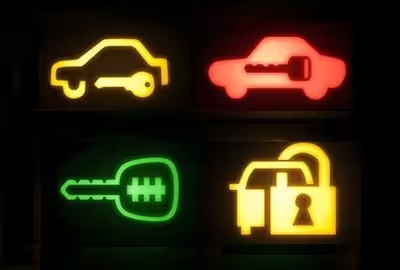
Security light stays on or flashes
A security indicator can provide useful information, but it does not by itself prove that the key is defective. Key programming, immobilizer communication, vehicle modules, wiring, or another security-system condition may be involved.
Replacement key not recognized
A mechanically cut key may still need electronic programming before the vehicle will authorize starting.
Remote works but car will not start
Remote locking and immobilizer authorization can be separate functions. A key may unlock the vehicle while still failing starting authorization.
Programming after ignition work
Whether electronic programming is required after ignition repair or replacement depends on the vehicle and what components were changed.
Worn Key vs Worn Ignition Cylinder
One of the most important parts of ignition diagnosis is determining whether the key or ignition cylinder is actually causing the problem.
Signs the key may be worn
- One key works worse than a spare
- Blade is visibly rounded or damaged
- Key needs to be moved slightly before turning
- Key has been bent or repeatedly copied
Signs the ignition may be worn
- Several correct keys have the same problem
- Ignition has become gradually harder to turn
- Cylinder feels loose or inconsistent
- Key becomes difficult to remove
- Internal lock operation feels rough
Why a worn key should not automatically be duplicated
If a badly worn key is copied exactly, the new key may reproduce the same wear pattern. When possible, the replacement should be based on correct key information rather than blindly copying a damaged blade.
For replacement-key information, see our car key replacement service.
Ignition Repair vs Ignition Replacement
Not every ignition problem requires complete replacement. The appropriate option depends on which components are damaged and whether reliable operation can be restored.
When ignition repair may make sense
Repair may be appropriate when the cylinder housing remains usable and the problem involves serviceable internal components, key-related wear, or another correctable mechanical issue.
When ignition replacement may make sense
Replacement may be considered when the cylinder is badly damaged, internal components are no longer serviceable, the housing is compromised, or previous damage makes a reliable repair impractical.
Forced or attempted-theft damage
If someone has forced tools or another object into the ignition, the cylinder, housing, steering-column components, and surrounding parts should be inspected before deciding what needs replacement.
Previous unsuccessful repairs
An ignition that has repeatedly failed after prior repair may require a different solution. We evaluate the current condition rather than assuming another temporary adjustment will be reliable.
Rekeying or Matching the Ignition to the Existing Key
When an ignition cylinder is repaired or replaced, one question is whether the customer will need a separate ignition key or whether the cylinder can be configured to work with an existing compatible vehicle key.
Keeping one mechanical key
On supported systems, matching compatible replacement ignition hardware to the existing mechanical key can be more convenient than carrying separate door and ignition keys.
When key matching may not be practical
Compatibility depends on the vehicle, cylinder design, hardware condition, and available replacement parts. Not every replacement ignition can simply be made to operate with every existing key.
Electronic authorization is separate
Matching the mechanical cuts does not automatically program a transponder or smart-key system. Mechanical keying and electronic authorization should be treated as separate functions.
On-Site Mobile Ignition Service
Mobile ignition repair is especially useful when the vehicle cannot be driven because the key will not turn, the ignition is locked, or a key has broken inside the cylinder.
Instead of towing the vehicle solely for an accessible ignition problem, our locksmith can inspect supported systems at the location of the car.
Service at home
If the vehicle is parked at your residence, ignition diagnosis and supported repair can be performed there.
Service at work
When the ignition fails in a workplace parking area, mobile service can help avoid leaving the vehicle stranded unnecessarily.
Parking lot or roadside locations
Service may also be possible at accessible parking locations where there is a safe area to work around the vehicle.
When towing may still be required
Some no-start conditions involve electrical, steering-column, module, or mechanical vehicle systems outside the scope of mobile locksmith ignition service. If the problem is not a supported lock-and-key issue, towing or another automotive specialist may still be necessary.
How the Ignition Service Process Works
1. Describe the symptoms
Tell us whether the key will not turn, will not come out, broke inside the ignition, turns without starting the vehicle, or is showing another symptom.
2. Provide vehicle information
The year, make, model, and key type help identify the likely ignition and security system.
3. Inspect the key
We evaluate visible key wear or damage before assuming the ignition itself is defective.
4. Inspect ignition operation
The cylinder, key movement, steering-lock pressure, and other accessible mechanical behavior are evaluated.
5. Separate mechanical from electronic symptoms
If the ignition turns but the vehicle does not start, we consider whether the problem may involve transponder authorization or another vehicle system rather than the cylinder.
6. Explain the recommended service
Repair, extraction, key replacement, ignition-cylinder replacement, or another supported solution is explained before authorized work begins.
7. Perform the repair or replacement
The agreed ignition service is completed using the appropriate parts and procedures for the supported vehicle.
8. Test key operation
The key should insert, rotate, return, and remove normally when the system is designed for a traditional keyed ignition.
9. Test vehicle starting
The vehicle is tested when practical to verify that the repaired ignition and applicable key authorization operate as expected.
Ignition Repair and Replacement Cost Factors
The cost of ignition repair in Austin depends on the vehicle, ignition design, problem, parts required, and whether additional key work is needed.
Factors that can affect the price
- Service call
- Vehicle make, model, and year
- Ignition diagnosis
- Key extraction
- Ignition repair vs complete replacement
- Condition of the existing cylinder
- Prior damage or forced-entry damage
- Replacement ignition availability
- Need to match the ignition to an existing key
- Replacement key cutting
- Transponder programming when applicable
- All keys lost vs working key available
- Vehicle location and accessibility
Prices are estimates until the vehicle, key, and ignition can be inspected. The final price is confirmed before authorized work begins.
Ignition Repair FAQ
Can a locksmith repair a car ignition?
Automotive locksmiths can repair or replace many supported mechanical ignition lock cylinders and address related key problems. Some electrical or vehicle-control problems require another automotive specialist.
Why won't my key turn in the ignition?
Possible causes include a worn key, worn ignition cylinder, internal lock damage, steering-lock pressure, contamination, or another mechanical problem.
Should I force a key that will not turn?
No. Excessive force can break the key or damage the ignition and make the repair more complicated.
Why does my key work if I jiggle it?
This can indicate wear in the key, ignition components, or both. It is a warning sign that the system should be inspected before complete failure occurs.
Can a worn car key damage the ignition?
A badly worn or damaged key can contribute to poor operation and may place additional stress on internal ignition components.
Can you remove a broken key from the ignition?
Broken-key extraction is possible in many situations. Whether the ignition also needs repair depends on its condition after the fragment is removed.
Do I need a new ignition if my key broke inside?
Not automatically. If the fragment can be removed and the ignition remains serviceable, replacement may not be necessary.
Why is my key stuck in the ignition?
Possible causes include key wear, cylinder problems, vehicle interlock issues, or the ignition not returning completely to the correct key-removal position.
Can you repair an ignition without towing the vehicle?
Many supported mechanical ignition problems can be serviced on-site, which can avoid towing when the vehicle is otherwise accessible.
What if the key turns but the car will not start?
The problem may involve the transponder, immobilizer, battery, starter, ignition switch, or another vehicle system rather than the mechanical lock cylinder.
Why is the security light flashing?
A security light can indicate an immobilizer or anti-theft-system condition, but diagnosis is needed to determine whether the key, programming, or another vehicle component is responsible.
Can a locksmith program a key after ignition replacement?
Many supported transponder keys can be programmed on-site. Whether programming is required depends on the vehicle and what was replaced.
Will a replacement ignition use a different key?
That depends on the vehicle and replacement hardware. Some supported ignition cylinders can be configured to work with an existing compatible mechanical key.
Can the ignition be rekeyed to match my door key?
On selected compatible vehicles and ignition designs, matching may be possible. The existing key, cylinder, and replacement hardware need to be evaluated first.
Can a bad ignition drain the vehicle battery?
Certain electrical ignition-switch or vehicle-system problems can contribute to abnormal electrical behavior, but battery drain is not automatically caused by the mechanical ignition cylinder. Electrical diagnosis may be required.
Can ignition problems cause the steering wheel to lock?
Ignition and steering-lock systems can interact on some vehicles. The exact relationship depends on the vehicle design.
Can you repair attempted-theft ignition damage?
Many damaged ignition cylinders can be evaluated, but attempted theft may also damage surrounding steering-column, electrical, trim, or security components.
Can I buy my own ignition cylinder?
You can, but compatibility should be confirmed before purchasing. Similar-looking ignition cylinders may differ by year, trim, key type, security system, or other vehicle-specific details.
Do you need proof of ownership for ignition service?
Security-sensitive automotive lock and key service is performed only for authorized customers. Identification and vehicle documentation may be requested before work begins.
Vehicle Makes We Service
Why Choose Okey DoKey Locksmith for Ignition Service?
Okey DoKey Locksmith provides mobile automotive locksmith service throughout Austin, allowing supported ignition problems to be inspected directly at the vehicle.
Diagnosis before replacement
We do not assume that every no-start condition requires a new ignition. The key, mechanical cylinder, transponder system, and visible vehicle symptoms are considered before recommending locksmith work.
Mechanical key and ignition experience
Ignition lock problems often involve the interaction between the key and internal cylinder components. Evaluating both can prevent replacement of the wrong part.
Related key services
If the problem includes a worn, broken, or lost key, we can evaluate whether car key replacement should be completed as part of the service.
Testing before completion
After supported ignition service, the key and ignition are tested through normal operating positions and vehicle starting is checked when practical.
Mobile Ignition Repair Service Around Austin
Okey DoKey Locksmith provides ignition repair and replacement throughout Austin and nearby areas for supported vehicles. Service is performed at the location of the vehicle whenever the problem and work environment allow on-site repair.
When contacting us, provide the vehicle year, make, model, location, and a description of the symptoms. Tell us whether the key turns, whether it is stuck, whether it broke, whether a spare key works, and whether any security warning appears on the dashboard.
This information helps distinguish a likely key or ignition-cylinder problem from another no-start condition before the visit.
Get Ignition Repair in Austin
If your key will not turn, is stuck or broken in the ignition, or you suspect a mechanical ignition problem, Okey DoKey Locksmith provides mobile ignition repair in Austin, Texas for supported vehicles.
We can inspect the key and ignition, determine whether repair, extraction, replacement, or additional key service is appropriate, and explain the available options before authorized work begins.
Our goal is to provide smooth key operation, dependable ignition function, correct starting authorization, and a practical repair that addresses the actual cause of the problem.
