

Door Closer Installation Austin TX - Okey DoKey Locksmith
If you need door closer installation, repair, or adjustment in Austin, Texas, Okey DoKey Locksmith provides fully mobile, on-site commercial locksmith service for offices, retail stores, apartment buildings, warehouses, medical facilities, schools, restaurants, and other commercial properties. We work with surface-mounted closers, heavy-duty closers, concealed systems, fire-door applications, and related commercial door hardware.
A door closer does more than prevent a door from slamming. It controls how the door moves through the closing cycle and helps the latch or exit device engage correctly when the door reaches the frame. Proper operation depends on the closer, arm, hinges, door, frame, latch, strike, and other hardware working together.
Before replacing a closer, we inspect the complete opening to determine whether the problem is caused by adjustment, hydraulic failure, incorrect closer sizing, loose mounting, damaged hinges, door sag, strike misalignment, or another condition. Our goal is controlled closing, dependable latching, safe operation, and long-term reliability without replacing hardware unnecessarily.
Contents
- Door Closer Service in Austin
- What Does a Door Closer Do?
- Sweep, Latch Speed, and Backcheck
- Types of Door Closers
- Door Closer Mounting Configurations
- When a Door Closer Needs Service
- Adjust, Repair, or Replace a Door Closer?
- Common Door Closer Problems
- Door Slams Shut
- Door Will Not Close or Latch
- Leaking Door Closer
- Door Closers on Fire-Rated Doors
- Door Closers and Accessibility
- Door Closers and Panic Bars
- Door Closer Installation Process
- Commercial Properties We Service
- Door Closer Cost Factors
- Door Closer FAQ
- Why Choose Okey DoKey Locksmith?
- Austin Door Closer Service Area
- Get Door Closer Service
Door Closer Installation, Repair, and Adjustment in Austin
Okey DoKey Locksmith provides commercial door closer service throughout Austin through our fully mobile locksmith operation. Service is performed directly at the property so the closer can be evaluated together with the actual door, frame, hinges, lock, strike, exit device, and daily traffic conditions.
We install new door closers, replace failed units, adjust existing closers, and troubleshoot doors that slam, close too slowly, stop before latching, become difficult to open, or no longer behave consistently.
Door closer services may include
- New door closer installation
- Door closer replacement
- Closing-speed adjustment
- Latch-speed adjustment
- Backcheck adjustment
- Closer-arm adjustment
- Loose hardware correction
- Hydraulic closer replacement
- Heavy-traffic closer upgrades
- Fire-door closer service
- Panic-bar door troubleshooting
- Access-controlled door troubleshooting
- Door and strike alignment evaluation
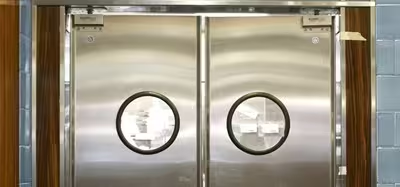
What Does a Door Closer Do?
A door closer controls the movement of a door after someone opens it. The closer stores energy as the door opens and then uses hydraulic or mechanical control to return the door toward the closed position.
A properly functioning closer should allow normal entry and exit while returning the door reliably enough for the latch or locking hardware to engage.
Controls closing speed
The closer regulates how quickly the door moves through most of the closing cycle.
Helps the door latch
During the final portion of travel, the door needs enough controlled movement to overcome normal latch resistance and reach the fully closed position.
Reduces slamming
Proper hydraulic control helps prevent the door from accelerating uncontrolled into the frame.
Helps maintain security
A commercial lock, electric strike, panic bar, or magnetic-lock system cannot secure an opening reliably if the door never returns to its proper closed position.
Controls opening movement
Some closers provide backcheck or other opening-control features designed to reduce excessive opening speed near the end of the swing.
Sweep, Latch Speed, and Backcheck
Many commercial hydraulic door closers have separate controls for different portions of door movement. Understanding these adjustments helps explain why simply turning one screw is not always the correct solution.
Sweep speed
Sweep speed controls the main portion of the door's closing movement.
If the sweep is too fast, the door may move aggressively toward people or equipment. If it is too slow, the door can remain open longer than intended.
Latch speed
Latch speed controls the final part of the closing cycle as the door approaches the frame.
This portion needs to provide enough movement for the latch or exit device to engage without causing excessive impact.
Backcheck
Backcheck can help resist excessive opening speed as the door approaches the wider portion of its swing. It is not intended to function as a rigid door stop.
Spring power
Some adjustable closers allow closing force to be increased or decreased within the manufacturer's range. The correct setting depends on the door, hardware, environment, and applicable requirements.
Types of Door Closers We Service
Commercial door closers come in several designs, and the appropriate type depends on the door, traffic level, appearance, opening conditions, and hardware requirements.
Surface-mounted door closers
Surface-mounted closers are among the most common commercial designs. The closer body and arm are mounted visibly on the door or frame, which makes them practical for many existing commercial openings.
Heavy-duty door closers
High-traffic entrances may require hardware designed for frequent daily cycling and heavier commercial doors.
Concealed door closers
Some doors use closers concealed within the door, frame, header, or floor. These systems provide a cleaner appearance but can require more specialized service.
Fire-door closers
Doors that form part of a fire-rated assembly often use self-closing hardware appropriate for that opening. The closer, door, latch, and other components need to function together correctly.
Adjustable-size closers
Many commercial closers allow spring power to be adjusted across a specified range so the same model can support different compatible doors.
Fixed-size closers
Other closers use a predetermined spring size selected for the intended door and application.
Door Closer Mounting Configurations
A surface closer can often be installed in different configurations depending on the door, frame, opening direction, appearance, and available mounting area.
Regular-arm mounting
In a regular-arm installation, the closer body is generally mounted to the pull side of the door while the arm attaches to the frame.
Top-jamb mounting
Top-jamb mounting places the closer body on the frame and is commonly used where door construction or mounting conditions favor that arrangement.
Parallel-arm mounting
Parallel-arm configurations are often used on the push side of commercial doors and can keep the arm more parallel to the door when closed.
Why mounting style matters
Closer performance, mounting dimensions, arm geometry, opening range, and available adjustment can differ according to the installation configuration.
When Does a Door Closer Need Service?
A door closer should be evaluated when the door no longer closes in a predictable, controlled manner.
Common signs of a closer problem
- Door slams shut
- Door closes extremely slowly
- Door stops before reaching the frame
- Door closes but does not latch
- Door bounces back open
- Closer leaks oil or hydraulic fluid
- Closer arm is loose
- Mounting screws repeatedly loosen
- Door becomes unusually difficult to open
- Closing behavior changes with weather
- Door does not secure after people pass through
- Closer makes unusual noises
Adjust, Repair, or Replace a Door Closer?
Not every closer problem requires new hardware. The correct solution depends on the condition of the closer and the rest of the door opening.
Door closer adjustment
Adjustment may solve problems involving sweep speed, latch speed, backcheck, or spring power when the closer itself remains in good condition.
Door closer repair
Loose arms, mounting hardware, brackets, or other serviceable components may sometimes be corrected without replacing the closer body.
Door closer replacement
Replacement is often more appropriate when the closer has lost hydraulic control, leaks fluid, has damaged internal components, cannot maintain adjustment, or is inappropriate for the door.
Incorrect closer size
A closer that is undersized or poorly matched to the opening may never provide reliable performance even after repeated adjustment.
Problem may not be the closer
Door sag, worn hinges, frame movement, latch problems, strike misalignment, wind pressure, or other hardware can make a properly functioning closer appear defective.
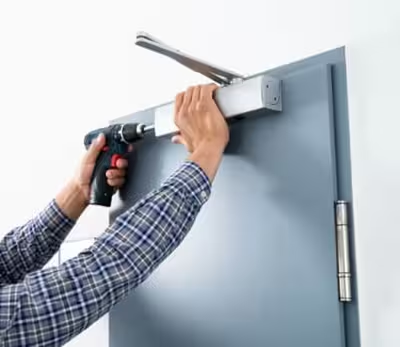
Common Door Closer Problems We Fix
Commercial door closer problems often develop gradually as hardware wears, mounting loosens, or the door moves out of alignment.
Door closes too quickly
The hydraulic adjustment may be incorrect, or the closer may have lost its ability to control the door.
Door closes too slowly
The sweep setting may be excessive, the closer may be poorly adjusted, or another part of the opening may be creating resistance.
Door does not latch
The closer may not provide enough final movement, but latch failure can also result from strike alignment, door sag, latch wear, or another mechanical problem.
Door bounces off the frame
Excessive closing speed, poor latch adjustment, weather stripping, pressure conditions, or hardware alignment can contribute to rebounding.
Door is difficult to open
Excessive closer spring power, binding hinges, door alignment, hardware friction, or another condition may increase opening resistance.
Closer settings keep changing
If adjustments do not remain stable, the hydraulic mechanism or adjustment valves may be worn or damaged.
Why Does My Commercial Door Slam Shut?
A commercial door that slams should be evaluated because repeated impact can damage locks, panic hardware, glass, hinges, frames, and the closer itself.
Closer is adjusted too fast
Sweep or latch settings may allow the door to move too quickly.
Hydraulic fluid has leaked
A closer that has lost hydraulic fluid can lose its ability to regulate motion and may allow the door to close rapidly.
Closer is damaged internally
Internal wear can prevent stable speed control even when external adjustment screws are changed.
Wind or pressure conditions
Exterior doors can also be affected by wind and building pressure. The closer needs to be evaluated as part of the complete opening rather than assuming every slam is purely an adjustment problem.
Door Closes but Will Not Latch
A commercial door that reaches the frame but does not latch can create a security problem even though the closer appears to be working.
Insufficient latch movement
The closer may not provide enough controlled final movement to overcome normal latch resistance.
Strike misalignment
The latch may be contacting the edge of the strike rather than entering the opening cleanly.
Door sag
Worn hinges or pivots can lower or shift the door enough to prevent proper latch engagement.
Panic-device alignment
Rim latches and vertical rods on exit-device doors require accurate alignment with their strikes.
Weather stripping or seals
Heavy seals can create additional resistance during the final closing movement.
Test the door without forcing it
A properly operating commercial door should not require someone to pull, push, or lift it manually every time it needs to latch.
Leaking Door Closer
Visible oil around a hydraulic closer can indicate seal failure or another internal problem.
Why hydraulic fluid matters
The closer depends on hydraulic resistance to regulate movement. Significant fluid loss can reduce that control.
Can a leaking closer simply be adjusted?
Adjustment cannot replace lost hydraulic fluid or repair a failed internal seal. A leaking closer often requires replacement rather than repeated speed adjustments.
Fluid on the door or floor
Leaking fluid can stain surfaces and may create a slip or maintenance concern depending on where it collects.
Sudden change in closing speed
If a door that was previously controlled begins slamming and hydraulic residue is visible, closer failure should be considered.
Door Closers on Fire-Rated Doors
Door closers are especially important on many fire-rated door assemblies because the door may need to return to the closed and latched position after use.
The closer is only one part of the assembly
Fire-door performance also depends on the door, frame, hinges, latch or fire exit hardware, seals, and other listed components.
Do not wedge the door open
A door intended to remain self-closing should not simply be defeated with an improvised wedge or object because the closer is inconvenient.
Replacement hardware
When replacing hardware on a known fire-rated opening, compatibility with the door assembly and applicable requirements should be considered before drilling or modification.
Door must latch
Closing most of the way is not the same as closing properly. The opening should be evaluated when the door reaches the frame but consistently fails to latch.
Door Closers and Accessibility
Door closer adjustment can affect how much force is required to open a door and how quickly the door closes. Accessibility considerations can therefore be relevant on public and commercial openings.
Do not simply increase spring power
Increasing closer force may help a difficult door latch, but excessive opening resistance can create another problem. Door alignment, hinges, latch resistance, seals, and closer sizing should be checked first.
Closing speed matters
An excessively fast-closing door can be difficult for people with limited mobility, while an excessively slow door may not secure reliably.
Opening conditions vary
Applicable requirements depend on the door, building, occupancy, and other conditions. Adjustment should balance reliable closing with appropriate usability.
Door Closers and Panic Bars
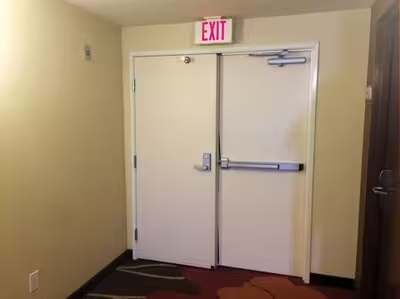
Commercial doors with panic bars or exit devices depend on the closer to return the door far enough for the latch or vertical rods to re-engage.
Panic bar releases correctly but door stays open
The exit device may be functioning normally while the closer fails to return the door.
Door reaches frame but rim latch does not engage
The closer, latch, strike, hinges, or alignment may need adjustment.
Vertical rod devices
Doors with vertical rods can be especially sensitive to alignment because the top and bottom latches need to meet their strikes correctly.
High-traffic exit doors
Repeated use makes closer sizing, secure mounting, and accurate adjustment particularly important on commercial exit doors.
How Door Closer Installation Works
1. Inspect the door and frame
We check the door material, width, weight characteristics, frame, hinges or pivots, existing locks, exit hardware, and alignment.
2. Identify how the door is used
Traffic level, opening direction, exterior exposure, access-control hardware, and desired operation help determine the appropriate closer configuration.
3. Select compatible hardware
The closer is matched to the door and intended mounting arrangement rather than selected only by physical appearance.
4. Determine mounting position
Regular-arm, top-jamb, parallel-arm, or another compatible configuration is selected according to the door and frame.
5. Prepare mounting locations
The closer body, shoe, arm, and related hardware are positioned using the required dimensions.
6. Install the closer
The closer body and arm are mounted securely to the door and frame.
7. Adjust closing behavior
Sweep speed, latch speed, backcheck, and spring power are adjusted where supported.
8. Test the latch or exit device
The door is checked to confirm that the closer returns it far enough for the locking hardware to engage.
9. Cycle the door repeatedly
Several opening and closing cycles help verify consistent behavior rather than relying on one successful closure.
10. Make final adjustments
Settings are refined based on actual door movement and hardware interaction.
Commercial Properties We Service
Okey DoKey Locksmith provides door closer installation and repair for a wide range of commercial and multi-user properties throughout Austin.
- Office buildings
- Retail stores
- Restaurants
- Medical and dental offices
- Warehouses
- Industrial properties
- Schools
- Churches
- Apartment common areas
- Condominium buildings
- Commercial storefronts
- Multi-tenant buildings
- Employee entrances
- Emergency exit doors
- Access-controlled entrances
Door Closer Installation and Repair Cost Factors
The cost of door closer service in Austin depends on the closer, door, existing hardware, and type of work required.
Factors that can affect the price
- Service call
- Adjustment vs repair vs replacement
- Surface-mounted vs concealed closer
- Closer size and duty level
- Single door vs pair of doors
- Door material and construction
- Existing closer preparation
- Mounting configuration
- Door and frame alignment
- Hinge or pivot condition
- Panic-bar or exit-device interaction
- Fire-rated opening considerations
- Access-control hardware
- Magnetic lock or electric strike integration
- Hydraulic leakage
- Replacement brackets or arms
- Additional door modifications
Prices are estimates until the door and existing hardware can be inspected. The final price is confirmed before authorized work begins.
Door Closer FAQ
What does a door closer do?
A door closer controls the movement of a door as it returns toward the closed position and helps the latch or locking hardware engage consistently.
Can a locksmith install a door closer?
Yes. Commercial locksmith service commonly includes installation, replacement, adjustment, and troubleshooting of supported door closers and related hardware.
Can a door closer be adjusted?
Many hydraulic commercial closers provide adjustments for functions such as sweep speed, latch speed, backcheck, and sometimes spring power.
Why does my commercial door slam?
Possible causes include incorrect adjustment, hydraulic failure, fluid loss, closer damage, wind, pressure conditions, or an incorrectly sized closer.
Why does my door close too slowly?
The sweep setting may be too restrictive, the closer may be incorrectly adjusted, or hinges, seals, alignment, or other hardware may be creating resistance.
Why does the door stop before it closes?
Possible causes include closer adjustment, insufficient spring power, hinge friction, misalignment, an obstruction, seals, or another mechanical condition.
Why does my door close but not latch?
The problem may involve latch speed, closer power, strike alignment, hinges, latch condition, panic hardware, or door sag.
Why does the door bounce back open?
Excessive closing speed, heavy weather stripping, latch resistance, pressure conditions, or alignment problems can contribute to rebound.
Why is my door suddenly hard to open?
Possible causes include excessive closer spring power, hinge problems, binding hardware, door misalignment, or another mechanical issue.
What is sweep speed?
Sweep speed controls the primary portion of the door's closing movement.
What is latch speed?
Latch speed controls the final portion of closing as the door approaches the frame and latch engagement.
What is backcheck?
Backcheck provides resistance near the wider portion of the opening swing to help control excessive opening movement on closers equipped with that feature.
Can backcheck be used as a door stop?
Backcheck is intended to help control opening motion, not replace an appropriate physical stop where one is required.
Why is my door closer leaking oil?
A leaking hydraulic closer may have failed seals or internal damage. Significant fluid loss often means replacement is more practical than adjustment.
Can a leaking door closer be repaired?
That depends on the closer design and available parts, but many common leaking commercial closers are replaced once hydraulic control has failed.
How do I know if my door closer is too weak?
If the closer repeatedly cannot bring an otherwise properly aligned door into the latched position, sizing or spring power may be part of the problem.
Can a closer be too strong?
Yes. Excessive closing force can make the door unnecessarily difficult to open and can increase impact on hardware.
Can you replace a closer without replacing the door?
Usually, yes. A compatible replacement can often use existing or modified closer preparation while the door remains in place.
Can you install a closer on an aluminum storefront door?
Many aluminum storefront doors can use compatible commercial closers, but narrow framing and existing preparation should be evaluated first.
Can you install a closer on a wood door?
Many commercial wood doors can support closers when the door and frame provide appropriate mounting strength.
Does a panic-bar door need a closer?
Many commercial exit doors use closers so the door returns to the closed and latched position after occupants pass through.
Can a closer affect an electric strike?
Yes. If the closer does not return the latch correctly into the strike, the access-controlled opening may fail to secure.
Can a closer affect a magnetic lock?
Yes. A maglock requires proper contact between the magnet and armature, which depends on the door returning to the correct closed position.
Do fire-rated doors need door closers?
Many fire-rated openings require self-closing behavior, but the specific requirements depend on the door assembly, building, and applicable code conditions.
Can you adjust a fire-door closer?
Yes, supported closers can be adjusted, but the completed opening should still provide the required closing and latching behavior.
Does installing a closer automatically make a fire door compliant?
No. The closer is only one component. The door, frame, hinges, latch or exit hardware, labels, and other components can also affect the assembly.
Should I adjust the screws myself?
Small adjustment valves can significantly affect closing behavior, and excessive adjustment can damage some closers or allow hydraulic fluid to escape. Professional evaluation is useful when the cause of the problem is uncertain.
Why Choose Okey DoKey Locksmith for Door Closer Service?
Okey DoKey Locksmith provides mobile commercial door closer service throughout Austin. Because the service is performed at the property, we evaluate how the closer interacts with the actual door, frame, hinges, latch, panic hardware, and access-control components.
We diagnose the entire door opening
A closer should not automatically be replaced because the door fails to latch. Hinge wear, strike alignment, door sag, weather stripping, locks, and exit devices can all create similar symptoms.
Adjustment before unnecessary replacement
When an existing closer remains serviceable, proper adjustment may restore normal operation without installing new hardware.
Commercial door-hardware experience
Door closers frequently work together with panic bars, mortise locks, and other commercial hardware.
Repeated testing before completion
After service, the door is opened and closed repeatedly to verify sweep, latch action, closing position, and interaction with the locking hardware.
Door Closer Service Around Austin
Okey DoKey Locksmith provides door closer installation, adjustment, repair, and replacement throughout Austin and nearby areas. We service authorized commercial properties, offices, stores, restaurants, apartment common areas, warehouses, medical facilities, schools, and other commercial openings.
When contacting us, tell us whether the door is slamming, closing slowly, failing to latch, leaking oil, becoming difficult to open, or experiencing another problem.
Photos of the closer, arm, full door, frame, hinges, latch or panic bar, and strike can help identify the existing hardware before the service visit.
Get Door Closer Service in Austin
If you need door closer installation, repair, replacement, or adjustment in Austin, Texas, Okey DoKey Locksmith provides mobile commercial locksmith service directly at your property.
We can evaluate the closer, door, frame, hinges, latch, strike, panic hardware, and access-control components to determine whether adjustment, repair, or replacement is the practical solution.
Our goal is to provide controlled closing, dependable latching, smooth door movement, durable commercial hardware, and a door that performs consistently through daily use.
