

Safe Cracking Service Austin TX - Okey DoKey Locksmith
Okey DoKey Locksmith provides professional safe cracking and safe opening service in Austin, Texas for homeowners, businesses, property managers, and other authorized customers who need lawful access restored to a locked or malfunctioning safe. Our mobile safe locksmith service comes directly to your location when a combination is lost, a key is missing, an electronic keypad fails, a lock malfunctions, or the safe can no longer be opened normally.
Every safe is different, so the opening method is selected only after the safe, lock, and failure are evaluated. Depending on the situation, service may involve non-destructive techniques, lock repair, controlled drilling, or another professional access method. Our goal is to restore access while protecting the safe contents and surrounding property whenever practical, with clear authorization and realistic expectations before work begins.
Contents
- What Safe Cracking Really Means
- Common Reasons a Safe Will Not Open
- Types of Safes We Open
- Mechanical, Electronic, and Key-Operated Safe Locks
- Non-Destructive vs Destructive Safe Opening
- Safe Drilling and Controlled Access
- Authorization and Legal Requirements
- Our Professional Safe Opening Process
- After the Safe Is Opened
- Emergency Safe Opening Situations
- Mobile Safe Opening Throughout Austin
- Safe Cracking Frequently Asked Questions
- Why Professional Safe Cracking Matters
- Get Help Now
What Safe Cracking Really Means
Safe cracking is a general term used for professional methods of opening a locked safe when the normal key, combination, keypad, or locking mechanism is unavailable or no longer working. In legitimate locksmith work, the objective is not to defeat security for unauthorized access. It is to restore access for the verified owner or authorized representative using the most appropriate method for that particular safe.
The method depends on the safe's construction, lock design, condition, and reason for failure. Some safes can be opened without permanent damage, while others are specifically designed to resist manipulation and may require controlled drilling or another more invasive method. Safe ratings, internal relockers, hardened components, electronic failures, and boltwork condition can all affect the available options.
Common Reasons a Safe Will Not Open
A safe can become inaccessible even when the safe itself has not been physically damaged. We regularly receive calls from customers who know the safe belongs to them but can no longer operate the lock normally. A proper diagnosis helps determine whether the issue is related to the key, combination, electronics, lock body, handle, or internal boltwork.
- Forgotten or lost safe combination
- Lost or broken safe key
- Electronic keypad that no longer responds
- Dead or corroded keypad batteries
- Failed electronic lock or solenoid
- Mechanical dial that will not operate correctly
- Handle that turns poorly or will not retract the bolts
- Jammed or damaged internal boltwork
- Safe inherited or purchased without access information
- Combination appears correct but the safe still will not open
- Lock damaged by wear, impact, previous repair, or attempted entry
The symptoms alone do not always identify the cause. For example, a handle that refuses to move may indicate a lock problem, misaligned boltwork, or an internal failure. That is why inspection comes before the opening method is chosen.
Types of Safes We Open
Our mobile safe opening service works with a variety of safes used in residential, commercial, and business environments. Each type presents different access challenges based on its materials, lock configuration, mounting method, and security features.
- Residential safes for documents, jewelry, cash, and valuables
- Gun safes with mechanical or electronic locking systems
- Commercial and office safes
- Floor safes installed in concrete or structural flooring
- Wall safes installed between framing members
- Depository and drop safes used by businesses
- Fire-rated document safes
- Small electronic safes used in homes and offices
- Key-operated security boxes and safes
- Dual-lock safes using more than one access method
The opening method is never assumed simply from the appearance of the safe. Before work begins, the technician evaluates the safe type, locking mechanism, condition, and failure to determine the practical options.
Mechanical, Electronic, and Key-Operated Safe Locks
Safe lock technology varies considerably. Older and traditional safes may use a mechanical combination dial, while newer models frequently rely on electronic keypads, digital locks, override keys, or multiple locking systems. Identifying the lock technology helps narrow the possible causes of the failure.
Mechanical safe locks can be affected by worn internal components, dial problems, incorrect combinations, or issues with the safe's boltwork. Electronic locks may fail because of battery problems, damaged keypads, wiring, lock electronics, or internal components. Key-operated safes can become inaccessible because of lost keys, broken keys, damaged keyways, or failed lock cylinders.
Different locking systems require different diagnostic and opening approaches. A technique appropriate for one safe may be ineffective or unnecessarily damaging on another.
Non-Destructive vs Destructive Safe Opening
Non-destructive safe opening refers to methods intended to preserve the safe and locking system whenever the design, condition, and circumstances make that practical. These techniques may require specialized tools, additional time, and extensive knowledge of the particular lock system. Non-destructive opening is not possible or economically sensible in every situation.
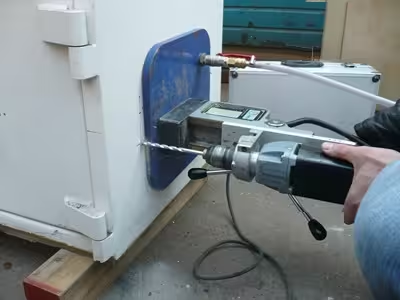
Some customers assume that drilling means the safe has been handled incorrectly. In reality, many modern safes are specifically designed to resist manipulation and unauthorized bypass. When non-destructive options are impractical, controlled drilling can be the most direct and responsible method of restoring access.
Destructive opening does not mean uncontrolled damage. The objective is to create only the access necessary to operate or bypass the failed locking component while reducing risk to the contents and surrounding structure. Customers are informed of the recommended approach before drilling or other destructive work begins.
Safe Drilling and Controlled Access
Safe drilling may be recommended when the lock cannot be manipulated, electronic components have failed, internal mechanisms are damaged, or the safe was designed to resist non-destructive opening. Professional drilling is different from simply making random holes in the safe. The technician first evaluates the safe and chooses an access approach based on the lock and construction.
The purpose is to restore authorized access with the minimum practical amount of damage. Depending on the safe and opening method, the lock or access point may later be repaired, replaced, secured, or permanently disabled. In other cases, replacement of the safe may make more economic sense than repairing it.
Before controlled drilling begins, the expected consequences are explained so the customer understands whether the safe is likely to remain usable afterward and what additional repair may be needed.
Authorization and Legal Requirements
Safe opening services are provided only to the safe owner or an authorized representative. Identification, proof of ownership, business authorization, estate documentation, property records, or other supporting information may be requested before the safe is opened.
Authorization requirements are especially important when the safe is located in a rental property, business, estate, storage facility, or property being managed on behalf of another person. Requests that cannot be reasonably verified may be declined.
These safeguards protect the property owner, the locksmith, and the contents of the safe while ensuring that professional safe opening remains a lawful service.
Our Professional Safe Opening Process
Every safe opening starts with information about the safe and the reason access has been lost. If possible, customers should provide the safe manufacturer, model, lock type, approximate size, and a description of what happens when they attempt to open it. Photographs can also help identify the safe before the technician arrives.
After arriving on-site, the technician performs a visual and mechanical assessment. This includes evaluating the lock, handle, door, visible damage, electronic components, and other information that may affect the opening method. Available options are then explained before work proceeds.
Once the customer approves the recommended method, the safe is opened using professional tools and controlled techniques appropriate for the situation. The objective is to restore access while avoiding unnecessary damage to the safe, contents, floor, wall, cabinetry, or nearby property.
After the Safe Is Opened
Opening the safe is only part of the service. After access has been restored, the technician can explain what condition the lock and safe are in and whether additional work should be considered.
Possible next steps may include safe lock replacement, repair, temporary securing, combination-related service, or replacement of the safe. The appropriate option depends on how the safe was opened, the value and condition of the safe, and whether the customer plans to continue using it.
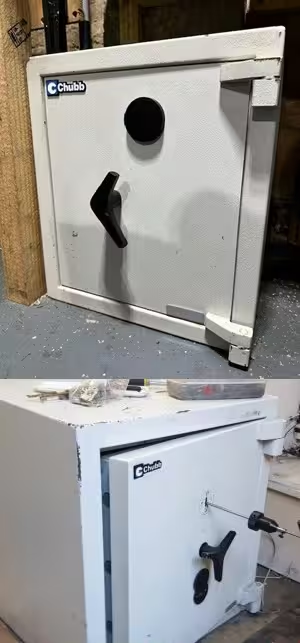
If drilling or another invasive opening method was necessary, we explain how that affects future use. Some safes can be repaired and returned to service, while others may no longer provide the security level they offered before opening. Replacement is sometimes the safer and more economical long-term solution.
Emergency Safe Opening Situations
Some safe problems are more urgent than others. Businesses may need access to deposits, cash, keys, records, or operational materials. Homeowners may need important documents, medication, identification, or other critical property stored inside a safe.
Our mobile emergency safe opening service allows the technician to come directly to the safe rather than requiring it to be removed or transported to a shop. Availability depends on technician location, existing service calls, the safe type, and the nature of the situation.
Urgency does not eliminate authorization requirements. Even during an emergency, ownership or authority to access the safe must be reasonably established before work begins.
Mobile Safe Opening Throughout Austin
Okey DoKey Locksmith provides mobile safe cracking and safe opening throughout Austin and nearby communities. Because the service is performed on-site, wall safes, floor safes, large gun safes, commercial safes, and other units generally do not need to be transported before they can be evaluated.
Service is available throughout Austin and surrounding areas based on technician availability and location. Customers in nearby communities can contact us with the safe type and service address to confirm coverage. Our broader Austin locksmith services also include residential, automotive, and commercial locksmith work.
Residential customers who need other lock or security assistance can view our Residential locksmith services, while businesses can learn more about Commercial locksmith services. Pricing varies by safe type, lock, condition, and opening method, so customers can also review our Locksmith service cost information before scheduling.
Safe Cracking Frequently Asked Questions
Can a locksmith open a safe without damaging it?
Sometimes. Non-destructive safe opening may be possible depending on the safe, lock, condition, and reason it will not open. Some safes are specifically designed to resist manipulation, so controlled drilling may be the more practical method.
Can you open a safe if I forgot the combination?
Yes, a lost or forgotten combination is one of the common reasons customers request safe opening service. The opening method depends on the lock design and condition of the safe.
Can you open an electronic safe when the keypad does not work?
Yes, many electronic-safe failures can be evaluated on-site. Problems may involve batteries, the keypad, wiring, the electronic lock, internal components, or the safe's boltwork. The technician determines the likely failure before selecting an opening method.
Can a locksmith open a safe when the key is lost?
In many cases, yes. The method depends on the key lock, safe construction, and whether another locking mechanism is also present.
Do you drill safes?
Yes. Controlled safe drilling may be used when less invasive methods are not practical or when the safe's lock or security design requires it. Drilling is discussed with the customer before the work begins.
Can a safe still be used after it has been drilled?
Sometimes. Certain safes can be repaired or fitted with replacement locking components after opening. Other safes may be too damaged or too inexpensive to justify repair. The technician can explain the options after access is restored.
Do I need proof that the safe belongs to me?
Yes, ownership or authorization must be reasonably verified before safe opening service is performed. The required documentation depends on whether the safe belongs to an individual, business, estate, landlord, property manager, or another authorized party.
Do you provide mobile safe opening in Austin?
Yes. Okey DoKey Locksmith provides mobile safe opening service in Austin and nearby service areas. The technician comes to the location of the safe with the equipment needed to evaluate and open it.
Why Professional Safe Cracking Matters
Attempting to force a safe open without understanding its construction can make the situation significantly worse. Improper drilling, prying, striking, or repeated manipulation can damage the lock, activate internal security features, distort the door, damage valuables, or turn a repairable problem into a complete loss.
Professional safe opening begins with diagnosis rather than force. A qualified locksmith evaluates how the safe is supposed to operate, what appears to have failed, and which opening options are realistic. This reduces unnecessary damage and helps preserve as many repair or recovery options as possible.
For businesses, professional service can also reduce downtime and help restore access to operational materials quickly. For homeowners, it provides a controlled way to recover documents and valuables without making the problem worse. The goal is not simply to get the safe open, but to open it responsibly.
Get Help Now
If you cannot open your safe, contact Okey DoKey Locksmith for professional safe cracking and safe opening in Austin, Texas. Tell us what type of safe you have, what kind of lock it uses, what happens when you try to open it, and where the safe is located.
Our mobile service allows the safe to be evaluated where it is installed. After inspection, the technician can explain the available options and recommended approach before work begins. Whether the problem involves a lost combination, failed keypad, missing key, damaged lock, or safe that simply stopped opening, we can help determine the most practical way to restore authorized access.
