

Deadbolt Vs Mortise Locks
Choosing between a deadbolt lock and a mortise lock depends on the door, existing hardware, how frequently the entrance is used, and what you want from the lock. Both designs are widely used, but they are constructed and installed very differently.
Deadbolts are common on residential exterior doors and provide a dedicated locking bolt. Mortise locks use a lock body installed inside a pocket cut into the edge of the door and can combine a latch and locking bolt within one assembly. Understanding these differences can help you choose the right lock for your door rather than assuming one design is always better than the other.
Contents
- Deadbolt vs. Mortise Lock Overview
- What Is a Deadbolt Lock?
- Types of Deadbolts
- What Is a Mortise Lock?
- Deadbolt vs. Mortise Lock Comparison
- Installation
- Security
- Durability
- Residential vs. Commercial Use
- Which Lock Should You Choose?
- Deadbolt and Mortise Lock Service in Austin
- Frequently Asked Questions
Deadbolt vs. Mortise Lock Overview
A deadbolt and a mortise lock are not simply two versions of the same hardware. A deadbolt is a dedicated locking mechanism, while a mortise lock is a larger lock assembly installed inside a prepared pocket in the door.
For many residential exterior doors, a deadbolt provides straightforward security without requiring the more extensive door preparation associated with a mortise lock. Mortise hardware is common on commercial doors, older buildings, and some residential doors originally designed for mortise locksets.
If you are replacing existing hardware, the door preparation matters. A door already configured for one system may require significant modification before a completely different type of lock can be installed.
What Is a Deadbolt Lock?
A deadbolt uses a solid bolt that extends from the lock into a strike mounted on the door frame. Unlike a spring latch that can retract when the latch is pushed, a deadbolt is moved into or out of the locked position through its operating mechanism.
Deadbolts are particularly common on residential exterior doors. They can be installed as separate locks above a knob or lever, and numerous mechanical and electronic versions are available.
For information about installation, replacement, and problems with this type of hardware, visit our Deadbolt Lock service page.
Types of Deadbolts
Single-Cylinder Deadbolt
A single-cylinder deadbolt typically has an exterior key cylinder and an interior thumb turn. This configuration is widely used because occupants can operate the inside of the lock without using a key.
Double-Cylinder Deadbolt
A double-cylinder deadbolt uses a key cylinder on both sides. Because a key is required for interior operation, egress and applicable code requirements should be considered before choosing this configuration.
Electronic and Keypad Deadbolts
Electronic deadbolts may provide keypad, app, credential, or other electronic access features depending on the model. Some also retain a mechanical key cylinder as an alternate means of operation.
What Is a Mortise Lock?
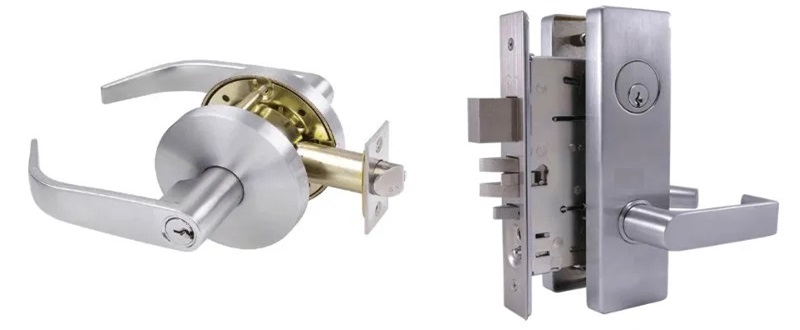
A mortise lock uses a lock body installed inside a rectangular pocket, or mortise, prepared in the edge of the door. Rather than having a separate cylindrical latch and deadbolt bored through the door, a mortise lockset can integrate several functions within one lock body.
A typical mortise lock may incorporate a latch bolt, deadbolt, cylinder, lever or knob operation, and other functions depending on the specific hardware. This integrated construction is one reason mortise locks are frequently used on doors designed for heavy or frequent use.
Mortise locks should not be confused with multi-point locking systems. A conventional mortise lock does not necessarily secure the door at several locations along the frame. Its configuration depends on the particular lockset.
If your door already has this type of hardware, see our Mortise Lock page for more information about repair, replacement, and installation.
Deadbolt vs. Mortise Lock Comparison
1. Installation
A standard deadbolt is normally installed through bored openings in the door and edge. Many residential doors are already prepared for common deadbolt dimensions, which can make replacement relatively straightforward when compatible hardware is used.
A mortise lock requires a correctly sized pocket in the edge of the door along with preparation for the trim, cylinder, spindle, and other components. Installing one into a door that was not originally prepared for mortise hardware is generally a more involved job.
2. Security
Both designs can provide effective door security when appropriate hardware is correctly installed. Security depends on more than whether a lock is labeled deadbolt or mortise.
The quality and condition of the lock, bolt, strike, door, frame, fasteners, and installation all matter. A quality deadbolt on a properly prepared residential door can be an excellent choice, while commercial-grade mortise hardware can be well suited to demanding entrances.
3. Durability
Mortise locks are available in heavy-duty configurations designed for frequent operation, which is one reason they are common in commercial buildings and other high-traffic applications.
Deadbolts can also provide many years of service when good-quality hardware is installed correctly and maintained. For a typical home entrance, commercial-duty hardware is not automatically necessary.
4. Door Preparation
The existing door is an important consideration. If a door was manufactured or previously prepared for a mortise lock, keeping or replacing it with compatible mortise hardware may make more sense than extensively modifying the door.
Similarly, a residential door already prepared for cylindrical hardware and a separate deadbolt may not benefit from being converted to a mortise system simply because mortise hardware is heavier.
5. Repair and Replacement
A conventional deadbolt has a relatively focused function, and compatible residential hardware is widely available. Mortise locksets contain more components within the lock body and can vary considerably in dimensions and function.
When replacing a mortise lock, matching the existing door preparation and hardware configuration is especially important.
Residential vs. Commercial Use
Residential Doors
For many homes, a quality single-cylinder deadbolt is a practical choice for an exterior entrance. It provides a dedicated locking bolt while remaining familiar and convenient for everyday use.
Mortise locks are also found in residences, particularly older homes, apartment buildings, and doors originally manufactured for mortise hardware. If a properly functioning mortise lock is already installed, there may be no reason to convert the door to another system.
Commercial Doors
Mortise locks are common on commercial entrances because commercial-grade versions are available for frequent use and numerous door functions. However, the correct commercial hardware depends on the door, occupancy, accessibility requirements, fire rating, egress requirements, and other factors.
Commercial security should therefore be evaluated as a complete door system rather than choosing a lock solely because it appears heavier or stronger.
Which Lock Should You Choose?
If you are choosing hardware for a typical residential exterior door already prepared for a deadbolt, installing a quality deadbolt is often the most straightforward option. If the door already contains a mortise lock, compatible mortise lock repair or replacement may be more appropriate.
You should also consider why you are changing the hardware. If your locks work properly and your only concern is that someone may still possess an old key, you may not need new locks at all. Our guide to the reasons to rekey your home explains when rekeying may be enough.
If the lock is damaged, worn, unreliable, or you want a different type of hardware, a Lock Change may make more sense.
Deadbolt and Mortise Lock Service in Austin
Okey DoKey Locksmith provides mobile lock service in Austin for residential and commercial properties. Existing hardware can be evaluated before deciding whether a lock should be repaired, rekeyed, or replaced.
For residential properties, visit our Residential Locksmith page for additional home lock services. Businesses can find related services on our Commercial Locksmith page.
If you need work on a specific lock type, see our Deadbolt Lock and Mortise Lock service pages.
Frequently Asked Questions About Deadbolt and Mortise Locks
Is a mortise lock better than a deadbolt?
Not automatically. The better choice depends on the door, existing preparation, intended use, hardware quality, and installation. Both can provide reliable security in appropriate applications.
Are mortise locks more secure than deadbolts?
Mortise locks are available in robust commercial-grade configurations, but lock type alone does not determine security. Door construction, strike installation, hardware quality, frame condition, and other components also matter.
Are mortise locks only for commercial buildings?
No. Although they are common in commercial properties, mortise locks are also found in homes, apartments, historic buildings, and other residential applications.
Are deadbolts only for residential doors?
No. Deadbolts can also be used in some business applications. The appropriate hardware depends on the particular door and applicable requirements.
Does a mortise lock have multiple locking points?
Not necessarily. A standard mortise lock may contain both a latch and deadbolt within one lock body, but that is different from a multi-point locking system that secures the door at several locations.
Can I replace a deadbolt with a mortise lock?
Potentially, but the two systems require different door preparation. Converting a door originally prepared for cylindrical hardware to a mortise lock can require substantial modification.
Can a mortise lock be replaced with a deadbolt?
It may be possible in some situations, but the existing mortise pocket and door preparation must be considered. A direct compatible mortise replacement may be a better solution.
Should I replace my locks if I lost a key?
Not necessarily. If the hardware is in good condition and you simply want the old key disabled, rekeying may be sufficient. Replacement is more appropriate when the hardware itself needs to be changed.
Deadbolt or Mortise Lock?
There is no single lock type that is best for every door. Deadbolts provide a simple and effective locking solution for many residential entrances, while mortise locks offer an integrated design commonly used on commercial, high-traffic, and traditionally mortised doors.
Choosing the right option means considering the door and hardware together. Okey DoKey Locksmith can inspect existing locks and provide mobile repair, rekeying, or replacement service in Austin based on the condition and configuration of the door.
