


Chevrolet Key Replacement Austin Texas - Okey DoKey Locksmith
If you need Chevrolet key replacement in Austin, Texas, Okey DoKey Locksmith provides mobile service directly at your vehicle for many supported Chevrolet key systems. We can help when every key is lost, a VATS key needs replacement, a transponder key is no longer recognized, a remote is damaged, a proximity fob stops working, or you need an additional spare.
Chevrolet has used several generations of automotive key technology, including traditional metal keys, VATS resistor keys, transponder chip keys, remote-head keys, high-security laser-cut keys, and proximity smart keys. These systems do not all use the same method of starting authorization, so identifying the Chevrolet model, year, key design, and security system is an important first step.
Our mobile Chevrolet locksmith service is available throughout Austin and surrounding areas for lost keys, broken keys, worn blades, damaged remotes, key-not-detected problems, lockouts, spare keys, and supported programming. For supported vehicles, the required work can be completed where the Chevrolet is parked and the finished replacement tested directly with the vehicle.
Contents
- Lost Chevrolet Key Replacement
- Types of Chevrolet Keys
- Chevrolet VATS and Pass-Key Systems
- Chevrolet Transponder and Immobilizer Keys
- Chevrolet Smart Keys and Push-Button Start
- Chevrolet Key Cutting and Programming
- Chevrolet Models We Service
- Chevrolet Key Replacement Cost
- Chevrolet Key and Anti-Theft Problems
- Chevrolet Key Replacement FAQ
Lost Chevrolet Key Replacement in Austin
Losing the only key to a Chevrolet can leave the vehicle locked and unable to start. For many supported models, all-keys-lost Chevrolet key replacement can be performed directly where the vehicle is parked, potentially eliminating towing solely for key service.
The replacement procedure depends heavily on the Chevrolet model, year, and security technology. An older mechanical-key application can primarily require key origination and cutting. A VATS-equipped Chevrolet requires the appropriate mechanical key and resistor configuration, while later electronic keys and proximity fobs can require a different authorization procedure.
If your Chevrolet is also locked, we can evaluate Unlock car door service before proceeding with replacement. For information about our broader automotive key service, see Car key replacement.
Lost All Chevrolet Keys
An all-keys-lost Chevrolet situation requires creating a working replacement without an existing authorized key available. Depending on the Chevrolet, the job can involve gaining authorized access, identifying the correct key, cutting a mechanical or emergency blade, determining a VATS configuration, programming a transponder, or authorizing a proximity smart key.
For supported vehicles, the objective is to restore both vehicle access and starting capability during the same mobile service visit whenever practical.
Lost or Stolen Chevrolet Keys
If a Chevrolet key was stolen rather than simply misplaced, tell the technician before service begins. On some supported security systems, previously authorized keys may be addressed as part of the replacement procedure.
The available options depend on the Chevrolet model, year, and security platform.
Lost Chevrolet VATS Key
A lost VATS key requires more than reproducing the mechanical cuts. On a supported VATS-equipped Chevrolet, the correct resistor configuration must also be identified so the replacement corresponds to the vehicle's anti-theft system.
This is an important difference between a VATS replacement and an ordinary mechanical-key replacement.
Chevrolet All-Keys-Lost Programming
Later Chevrolet security systems can require electronic authorization when no working key remains. The exact procedure depends on the vehicle and should not be assumed solely from the appearance of the replacement key.
A key that mechanically operates the Chevrolet is not necessarily authorized to start it.
Identifying the Correct Chevrolet Key
The Chevrolet model, model year, VIN, existing key type, and whether any working keys remain can help identify the correct replacement application. When an existing key or fob is available, a photo can also help identify the likely system.
If you are unsure where to locate the vehicle identification number, see What Is a VIN Number?.
Types of Chevrolet Keys
Chevrolet key technology has changed substantially across vehicle generations. Different models and years have used traditional mechanical keys, VATS resistor keys, transponder keys, remote-head keys, high-security blades, and proximity smart keys.
These represent different mechanical and security technologies rather than one universal Chevrolet key system. Correctly identifying the system matters because the cutting, security authorization, and programming requirements can be very different.
Traditional Chevrolet Metal Keys
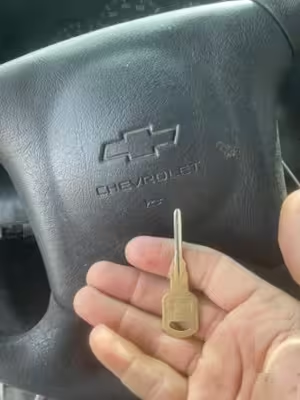
Some older Chevrolet vehicles use conventional mechanical keys for door and ignition operation. These keys primarily depend on accurate cutting and do not use the same electronic authorization procedures as later Chevrolet security systems.
A worn or poorly duplicated blade can stick, bind, or operate inconsistently. For supported applications, we cut the replacement accurately and test its mechanical operation directly with the vehicle.
Chevrolet VATS Resistor Keys
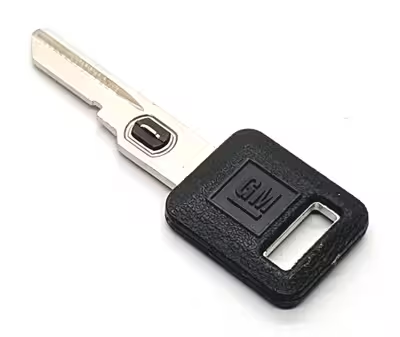
Some older Chevrolet vehicles use VATS keys with a visible resistor pellet incorporated into the key blade. The mechanical cuts and resistor configuration both matter for normal vehicle operation.
Chevrolet Transponder Keys
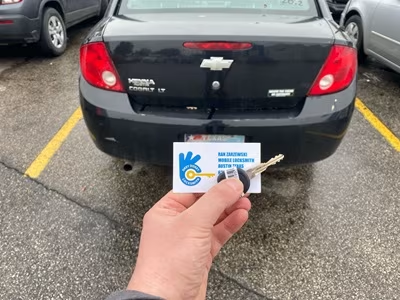
Many later Chevrolet vehicles use transponder or electronically authorized keys. These systems separate mechanical key operation from the electronic authorization required for normal starting.
Chevrolet Remote-Head Keys
Many Chevrolet vehicles use remote-head keys that combine the mechanical blade, electronic security component, and remote buttons in one housing. Depending on the model, the remote can operate locking, unlocking, panic, trunk release, or other functions.
Remote operation does not necessarily confirm starting authorization. A remote can operate correctly while the Chevrolet still refuses to start because the security system does not recognize the key as an authorized starting key.
Chevrolet High-Security and Laser-Cut Keys
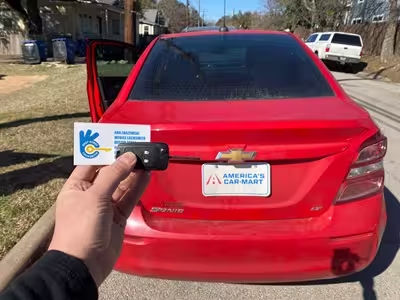
Some Chevrolet models use high-security blades commonly described as laser-cut or sidewinder keys. These profiles require specialized automotive cutting equipment and precise alignment.
Depending on the vehicle, the blade can be integrated into a transponder key, remote-head key, or smart-key emergency blade. Mechanical cutting and electronic authorization should be verified separately when both are involved.
Chevrolet Proximity Smart Keys
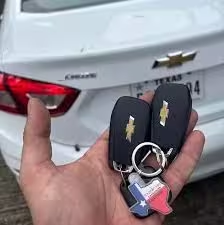
Many newer Chevrolet vehicles use proximity smart keys with keyless entry and push-button start. Rather than inserting a conventional ignition key, the vehicle electronically detects an authorized fob.
Chevrolet VATS and Pass-Key Systems
Some older Chevrolet vehicles use GM VATS or Pass-Key anti-theft systems. Understanding the particular system matters because these earlier security technologies should not automatically be treated like ordinary modern transponder keys.
What Is a Chevrolet VATS Key?
A Chevrolet VATS key contains a visible resistor pellet in the key blade that forms part of the vehicle's starting authorization. A replacement therefore requires more than simply matching the mechanical cuts.
How the VATS Resistor Pellet Works
The resistor value in the key must correspond to the vehicle's security system. If the mechanical blade is correct but the resistor configuration is not, the key can physically fit and turn while the Chevrolet still fails to allow normal starting.
Chevrolet VATS Key Replacement
For a supported VATS-equipped Chevrolet, replacement involves identifying the appropriate mechanical key and resistor configuration. Both need to correspond to the vehicle for the replacement to function correctly.
Why a VATS Key Can Turn but Not Start the Car
Mechanical operation and anti-theft authorization are separate parts of a VATS key's function. The correct blade can operate the ignition mechanically while an incorrect resistor configuration prevents normal starting authorization.
That means a key that turns in the ignition should not automatically be assumed to be a complete or correct VATS replacement.
Chevrolet Pass-Key and Passlock Systems
Chevrolet also used later GM anti-theft systems such as Pass-Key and Passlock-related configurations. Different GM security generations use different methods of authorizing the vehicle, so the exact Chevrolet model and year should be confirmed before determining the appropriate replacement procedure.
VATS vs Chevrolet Transponder Keys
A VATS resistor key and a later Chevrolet transponder key should not automatically be treated as the same technology. A VATS application uses a resistor configuration as part of its security system, while later electronically authorized keys can rely on a different method of vehicle recognition.
Identifying which security generation is present helps determine whether the job involves a resistor configuration, electronic key programming, mechanical cutting, or a combination of procedures.
Chevrolet Transponder and Immobilizer Keys
Many later Chevrolet vehicles use transponder or electronically authorized keys that communicate with the vehicle's security system before normal starting is permitted.
How Chevrolet Transponder Keys Work
The mechanical blade and electronic authorization perform separate functions. A key may unlock the door and physically operate the ignition while the engine still refuses to start if the transponder is missing, incompatible, damaged, or not properly recognized.
For a general explanation of chip-key technology, see What Is Transponder Key?.
Chevrolet Transponder Key Replacement
A complete replacement can involve cutting the correct blade and programming the electronic key to the vehicle. Both parts of the replacement should function correctly before the job is considered complete.
Chevrolet Transponder Key Programming
When electronic programming is required, the objective is to make the Chevrolet recognize the replacement as an authorized starting key. For supported applications, we perform the required procedure at the vehicle and verify normal starting operation afterward.
Chevrolet Security Light and No-Start Problems
If a Chevrolet security indicator behaves abnormally and the vehicle will not start, the issue can involve the key, anti-theft system, programming, or another vehicle-side problem.
A security-related no-start condition should be diagnosed before assuming that the entire key needs replacement.
Chevrolet Smart Keys and Push-Button Start
Many newer Chevrolet vehicles use proximity smart keys with keyless entry and push-button start. Instead of inserting a conventional ignition key, the vehicle electronically detects an authorized fob.
Chevrolet Smart Key Replacement
A replacement smart key must be compatible with the specific Chevrolet before programming is attempted. Similar-looking fobs can use different electronics, frequencies, button layouts, or vehicle applications.
When supported, we program the replacement and verify the applicable functions directly with the vehicle.
Chevrolet Keyless Entry and Push-Button Start
Depending on the Chevrolet model and trim, the fob can support proximity entry, remote locking and unlocking, push-button starting, remote start, trunk or liftgate functions, panic, and other convenience features.
These functions should be tested individually because successful engine starting does not automatically confirm that every remote feature is operating correctly.
Chevrolet Says Key Not Detected
If a Chevrolet reports that the key is not detected, possible causes can include a weak fob battery, damaged electronics, incompatible replacement fob, programming issue, recognition-system problem, or another vehicle-side condition.
A key-not-detected message should be diagnosed before assuming that complete smart-key replacement is required.
Chevrolet Smart Key Emergency Blade
Many Chevrolet smart fobs include a removable emergency mechanical blade for manual door access. When applicable, that blade may also need to be cut as part of a complete replacement.
The emergency blade provides mechanical access and should be considered separately from the electronic authorization provided by the proximity fob.
Chevrolet Key Cutting and Programming
Our mobile equipment allows many supported Chevrolet key cutting and programming services in Austin to be performed directly at the vehicle. This can be especially useful when every key is lost and the Chevrolet cannot simply be driven somewhere for service.
The exact procedure depends on the key system. A traditional key can primarily require mechanical cutting, while a VATS key adds a security configuration. Transponder and remote-head keys can involve mechanical and electronic work, while proximity smart keys use another authorization procedure.
There is no single Chevrolet key-programming procedure that applies to every model year. Correct vehicle and security-system identification is therefore an important first step.
Chevrolet Key Cutting
Different Chevrolet applications can use conventional blades, high-security sidewinder blades, or removable emergency keys. The appropriate cutting method depends on the specific key design.
Mechanical accuracy remains important even when electronic programming is also required. A correctly authorized electronic key can still have a mechanical problem if a required blade is cut incorrectly.
Chevrolet Key Programming
When electronic programming is required, the objective is to make the Chevrolet recognize the replacement as an authorized key. Depending on the vehicle, this can involve a transponder key, remote-head key, or proximity smart key.
Confirming the Correct Chevrolet Key
The Chevrolet model, model year, VIN, existing key type, and whether any working keys remain can help identify the correct replacement application.
If you are considering supplying your own replacement, see Buy car keys online and Cut keys online. Similar-looking Chevrolet keys are not necessarily electronically or mechanically compatible.
Testing After Chevrolet Key Programming
Depending on the Chevrolet and key system, testing can include mechanical door operation, ignition operation, anti-theft authorization, engine starting, remote locking and unlocking, proximity detection, push-button starting, remote start, and trunk or liftgate functions.
Testing directly with the vehicle helps identify a cutting, programming, or compatibility problem before service is completed.
When the Problem Is the Chevrolet Ignition
If a Chevrolet key sticks, becomes difficult to insert, refuses to turn smoothly, or requires excessive movement, the ignition cylinder may be worn or damaged.
In those situations, our Ignition repair service may be more appropriate than simply making another key.
When Chevrolet Dealer Service May Be Required
Some newer security systems, electronic modules, or specialized procedures may require factory-level access or equipment outside normal mobile locksmith capabilities. If that applies to a particular Chevrolet, we explain the limitation rather than attempting an unsupported procedure.
When dealership involvement is appropriate, customers can use the official Chevrolet dealer locator.
Spare Chevrolet Keys
If you still have one functioning key, making a spare Chevrolet key before the original is lost can prevent a more complicated all-keys-lost situation later.
The additional key may require mechanical cutting, a VATS-related security configuration, transponder programming, remote setup, smart-key authorization, emergency-blade cutting, or another procedure depending on the vehicle.
We test the additional key independently before completing the service rather than assuming that it works because another key remains functional.
Chevrolet Models We Service
We provide Chevrolet key replacement and programming for many supported cars, trucks, SUVs, vans, performance vehicles, and electric vehicles throughout Austin and surrounding areas. Exact key technology varies by model year and trim.
Chevrolet Silverado Key Replacement
Chevrolet Silverado key systems vary considerably between generations. Depending on the model year and trim, replacement can involve traditional keys, transponder keys, remote-head keys, high-security keys, or proximity smart keys.
Lost Silverado Keys
If every Silverado key is lost, the replacement procedure depends on the truck's year and security system. The job can involve identifying the correct key, cutting the required blade, and completing the applicable electronic authorization procedure.
Silverado Transponder and Remote Keys
On supported Silverado applications using an electronically authorized key, mechanical operation and starting authorization should both be verified. Remote operation alone does not confirm that the key is authorized to start the truck.
Silverado Smart Key Replacement
For supported Silverado proximity-key applications, the replacement fob must be matched to the specific vehicle before programming. Similar-looking Chevrolet fobs should not be assumed to be interchangeable.
Spare Chevrolet Silverado Keys
When a functioning Silverado key remains, an additional key can be prepared as a spare. The required work depends on the key system and can include mechanical cutting, electronic programming, remote setup, or smart-key authorization.
Chevrolet Colorado Keys
Chevrolet Colorado key replacement depends on the model year and key configuration. The correct mechanical blade and electronic system should be identified before cutting or programming begins.
Chevrolet Tahoe and Suburban Keys
Chevrolet Tahoe and Suburban key technology varies by model year and security system. Depending on the vehicle, replacement can involve mechanical cutting, electronic authorization, remote functions, or proximity-key programming.
Chevrolet Equinox Keys
Chevrolet Equinox key replacement can involve remote or proximity-key systems depending on the model year and configuration. Compatibility should be confirmed using the exact vehicle before programming.
Chevrolet Traverse Keys
Chevrolet Traverse key systems vary by model year and trim. The correct replacement should be identified before mechanical or electronic work begins.
Chevrolet Trax and Trailblazer Keys
Chevrolet Trax and Trailblazer replacement requirements depend on the model year and key configuration. When electronic authorization is required, the replacement must be compatible with the specific vehicle.
Chevrolet Malibu and Impala Keys
Chevrolet Malibu and Impala models span different generations of Chevrolet key and security technology. The exact replacement procedure therefore depends on the vehicle's model year and existing key system.
Chevrolet Camaro Keys
Chevrolet Camaro key replacement requirements vary between generations. Correct key identification is important before cutting or programming because the key and security configuration can differ by model year.
Chevrolet Corvette Keys
We evaluate Chevrolet Corvette key replacement for supported model years and key systems, including remote and proximity-key applications depending on the generation.
Chevrolet Express Keys
Chevrolet Express key replacement depends on the model year and security configuration. We identify the applicable key system before determining the cutting or electronic work required.
Chevrolet Bolt EV and Bolt EUV Keys
We evaluate key replacement for supported Chevrolet Bolt EV and Bolt EUV applications. The exact replacement and authorization procedure depends on the vehicle and key configuration.
Other Chevrolet Models We Service
- Chevrolet Blazer
- Chevrolet Cruze
- Chevrolet Sonic
- Chevrolet Spark
- Chevrolet Avalanche
- Chevrolet Volt
When requesting service, provide the Chevrolet model, model year, vehicle location, whether any working keys remain, and the type of key or fob. A photo of an existing key can also help identify the system when one is available.
Chevrolet Key Replacement Cost
The cost of Chevrolet key replacement in Austin depends on the model, year, key technology, and work required. A traditional mechanical key involves a different process from a VATS resistor key, transponder key, high-security remote key, or proximity smart key.
Chevrolet Model and Year
The model and year help determine the mechanical blade, anti-theft system, electronic key platform, and required replacement procedure.
Type of Chevrolet Key
A mechanical key, VATS resistor key, transponder key, remote-head key, high-security key, or proximity smart key can each require different equipment and procedures.
VATS Resistor Configuration
On a VATS-equipped Chevrolet, identifying the appropriate resistor configuration is part of the replacement process in addition to producing the correct mechanical key.
All Keys Lost vs Adding a Spare
An all-keys-lost job can involve additional work compared with adding another key while one functioning key remains.
Mechanical Key Cutting
Different Chevrolet applications can use conventional blades, high-security sidewinder blades, or removable emergency keys that require different cutting methods.
Ignition and Lock Condition
A worn ignition or lock can affect how even a correctly cut replacement operates. Additional mechanical repair may be necessary if the cylinder is damaged.
Replacement-Key Compatibility
Chevrolet keys and fobs that look similar can use different electronics, transponders, frequencies, button layouts, resistor configurations, or vehicle applications. Confirming compatibility before purchasing can prevent unnecessary expense.
Chevrolet Key and Anti-Theft Problems
Not every Chevrolet key or starting problem means that a new key is required. The cause can depend on the generation of the security system as well as the mechanical condition of the key, ignition, or electronic fob.
Chevrolet Security Light and No Start
If the security indicator behaves abnormally and the Chevrolet will not start, the problem can involve the key, anti-theft system, programming, or another vehicle-side condition.
Chevrolet VATS Key Turns but Car Will Not Start
A VATS key can have the correct mechanical cuts and physically turn in the ignition while still failing to provide the required security authorization if its resistor configuration does not correspond to the vehicle.
Chevrolet Transponder Key Turns but Engine Will Not Start
On electronically authorized applications, mechanical blade operation and electronic starting authorization perform separate functions. A key can turn correctly while the vehicle does not recognize the required electronic authorization.
Chevrolet Says Key Not Detected
A key-not-detected condition can involve a weak fob battery, damaged electronics, incompatible replacement fob, programming issue, recognition-system problem, or another vehicle-side condition.
Chevrolet Remote Works but Car Will Not Start
Remote locking functions and engine-start authorization are not necessarily the same system. A remote can operate the locks while the Chevrolet still does not recognize the key as authorized for starting.
Chevrolet Key Is Hard to Insert or Turn
If a Chevrolet key sticks, becomes difficult to insert, refuses to rotate smoothly, or requires excessive movement, the problem can involve key wear, ignition wear, cylinder damage, or a combination of mechanical issues.
Damaged Chevrolet Key or Key Fob
A damaged Chevrolet key can involve the mechanical blade, key housing, remote buttons, electronic security component, proximity-fob electronics, or emergency blade. The failed component should be identified before determining what needs replacement.
Chevrolet Key Replacement FAQ
Can a locksmith make a Chevrolet key if I lost the original?
For many supported Chevrolet vehicles, yes. Chevrolet key replacement can often be performed when all original keys are lost. The exact procedure depends on the model, year, key technology, and security system.
What is a Chevrolet VATS key?
A Chevrolet VATS key uses a resistor pellet built into the key blade. On vehicles equipped with the system, both the mechanical cuts and correct resistor configuration are important for normal starting.
Is a Chevrolet VATS key the same as a transponder key?
They should not automatically be treated as the same security technology. A VATS application uses a resistor configuration as part of starting authorization, while later electronically authorized Chevrolet keys can use a different vehicle-recognition method.
Can you replace a Chevrolet VATS key?
We evaluate replacement for supported VATS-equipped Chevrolet vehicles. The appropriate resistor configuration and mechanical key need to be identified correctly.
Can you program a Chevrolet transponder key?
We provide programming for many supported Chevrolet transponder systems. The replacement may require both mechanical cutting and electronic authorization before it functions as a complete starting key.
Can you replace a Chevrolet smart key?
We evaluate replacement for many supported Chevrolet proximity and push-button-start systems. The correct fob must be matched to the specific vehicle before programming.
Can you replace a Chevrolet Silverado key?
Yes, for many supported model years. Chevrolet Silverado key replacement can involve traditional keys, transponder keys, remote-head keys, high-security keys, or proximity smart keys depending on the generation and trim.
Can you replace a Chevrolet Tahoe or Suburban key?
We provide replacement for many supported Tahoe and Suburban model years. The exact key and procedure depend on the vehicle's year and security system.
Can you replace a Chevrolet Equinox key fob?
We evaluate replacement for many supported Chevrolet Equinox remote and proximity-key systems. Compatibility should be confirmed using the model year and existing key configuration.
Can you replace a Chevrolet Corvette key?
We evaluate Chevrolet Corvette key replacement for supported model years and key systems, including remote and proximity-key applications depending on the generation.
Can you make a Chevrolet key without towing the vehicle?
For many supported situations, yes. Mobile key-cutting and programming equipment can be brought directly to the Chevrolet, potentially eliminating towing solely for key replacement.
Can I buy a Chevrolet key online and have it programmed?
Sometimes, but compatibility should be confirmed first. Similar-looking Chevrolet keys can use different transponders, electronics, frequencies, resistor values, or button configurations.
Can you make a spare Chevrolet key?
Yes, for many supported vehicles. Making a spare while a functioning key remains can reduce the inconvenience and complexity of a future all-keys-lost situation.
Mobile Chevrolet Locksmith in Austin
Okey DoKey Locksmith provides mobile Chevrolet key replacement throughout Austin and surrounding areas. Instead of requiring you to move a Chevrolet that cannot be started, we bring supported key-cutting and programming equipment directly to the vehicle.
Depending on the situation, service can be provided at your home, workplace, parking lot, garage, roadside location, job site, or another appropriate location in the Austin area.
Chevrolet key technology spans very different generations, from traditional mechanical keys and VATS resistor systems to transponder keys, high-security blades, remote-head keys, emergency blades, and proximity smart keys. Our process begins by identifying the actual key and security system rather than assuming every Chevrolet uses the same technology.
If you need Chevrolet key replacement in Austin, Texas, contact Okey DoKey Locksmith with your Chevrolet model, year, location, and a brief description of the problem. Let us know whether all keys are lost, a working key remains, the key is broken, the remote stopped responding, the ignition is difficult to turn, or the vehicle reports that the key is not detected.
