

House Lockout Austin TX! Locked Out? What To Do - Cost
If you are locked out of your house in Austin, Texas, Okey DoKey Locksmith provides fully mobile, on-site residential lockout service for houses, apartments, condos, townhomes, and other authorized residential properties. We help with lost keys, keys locked inside, broken keys, malfunctioning locks, deadbolts that will not turn, and selected smart-lock problems.
Our locksmith comes directly to your property, verifies authorization, evaluates the door and lock, and selects an entry method suited to the hardware and condition of the opening. The goal is to restore access while minimizing unnecessary damage to the lock, door, frame, and surrounding hardware whenever possible.
House lockout service is available throughout Austin and nearby areas during our extended service hours. Whether the problem is a simple key lockout or a lock that has mechanically failed, we focus on safe entry, clear communication, and restoring normal access without unnecessary replacement when the existing hardware can remain in service.
Contents
- House Lockout Service in Austin
- Common Reasons for Home Lockouts
- Keys Locked Inside the House
- Lost or Stolen House Keys
- Broken Key in a Door Lock
- Lock or Deadbolt Malfunction
- Smart Lock and Keypad Lockouts
- Non-Destructive Entry Whenever Possible
- Types of Residential Locks and Doors We Service
- Apartment and Condo Lockouts
- Urgent House Lockout Situations
- What Happens After the Door Is Open?
- When Rekeying or Lock Replacement Makes Sense
- How House Lockout Service Works
- House Lockout Cost Factors
- House Lockout FAQ
- Why Choose Okey DoKey Locksmith?
- Austin House Lockout Service Area
- Get Help With a House Lockout
House Lockout Service in Austin
Okey DoKey Locksmith provides mobile house lockout service throughout Austin for authorized residents, homeowners, tenants, landlords, and property representatives who cannot enter a residential property using the normal key or access method.
A house lockout can be caused by something as simple as leaving the key inside, but it can also involve a worn cylinder, failed deadbolt, broken key, misaligned door, damaged latch, or electronic lock problem. We identify the likely cause before deciding how entry should be restored.
Because the work is performed on-site, the locksmith can inspect the actual door, lock, strike, frame, and existing hardware rather than treating every lockout as the same problem.
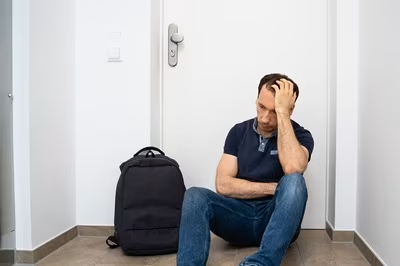
Common residential lockout services
- Front-door lockouts
- Back-door and side-door lockouts
- Apartment lockouts
- Condo lockouts
- Keys locked inside the home
- Lost or stolen keys
- Broken key extraction
- Deadbolt lockouts
- Mortise-lock lockouts
- Keypad or smart-lock problems
- Lock failure causing a lockout
Common Reasons for Home Lockouts
Residential lockouts happen for different reasons, and each situation can require a different response. The lock may be functioning normally with the key simply inaccessible, or the lock itself may have failed.
Keys left inside
Keys may be left on a table, in a bag, hanging near the door, or accidentally left inside while the door locks behind you.
Keys lost away from home
If the key cannot be located, restoring entry solves the immediate problem, but there may also be a reason to change key access afterward.
Key was stolen
A stolen house key creates a different security concern from a key simply left indoors. Rekeying or replacing the affected lock may be worth considering after entry is restored.
Key broke in the lock
A worn or damaged key can break inside the cylinder, leaving the door locked and part of the key trapped inside.
Lock suddenly stopped working
Internal wear, cylinder failure, latch problems, deadbolt pressure, loose hardware, or door misalignment can prevent a normally working key from opening the door.
Electronic lock failure
Low batteries, keypad problems, app issues, failed electronics, or mechanical binding can cause an electronic lockout even when the correct code or credential is available.
Keys Locked Inside the House
If the keys are locked inside the house and the lock is otherwise functioning correctly, a lock change is not automatically necessary. The first goal is simply to restore authorized access.
Door locked behind you
Spring-latch locks can automatically secure the door when it closes even though the key remains inside. Deadbolts generally create a different lockout situation because they normally require deliberate locking.
Do not force the door
Prying the door, kicking it, forcing the handle, or repeatedly twisting a key can damage the lock, frame, strike, trim, or door itself and turn a basic lockout into a repair job.
Existing lock may remain usable
If entry can be restored without damaging a functioning lock, the existing hardware can often remain in service after the door is opened and tested.
Lost or Stolen House Keys
If your house keys are lost or stolen, the immediate problem is getting back inside, but the longer-term issue is whether the missing key should continue to operate the lock.
Lost key with no identifying information
The appropriate response depends on where the key was lost, whether it can be associated with the property, and how concerned you are about unauthorized access.
Stolen key
If a key was stolen together with identification, a bag, wallet, vehicle, or other information that could connect it to your address, changing key access may be more important.
Rekeying after a lost key
If the existing lock is in good condition and compatible with rekeying, the cylinder can often be changed internally so the missing key no longer works.
Lock replacement after a lost key
Replacement may make sense when the lock is worn, damaged, outdated, unreliable, or you want to upgrade the hardware at the same time.
Broken Key in a Door Lock
A broken key can create both a lockout and an obstruction inside the cylinder. Avoid pushing the fragment farther into the lock or inserting another key behind it.
Can a broken house key be removed?
In many situations, yes. The success of extraction depends on how deeply the fragment is lodged, whether the cylinder is damaged, and the position in which the key broke.
Why keys break
Keys can weaken because of age, bending, deep cuts, repeated force, poor duplication, or a lock that has become increasingly difficult to turn.
What happens after extraction?
After the fragment is removed, the cylinder and key should be checked to determine whether the lock is still operating correctly or whether rekeying, repair, or replacement is appropriate.
Lock or Deadbolt Malfunction Causing a Lockout
Sometimes the key is present and correct, but the door still will not open. In these situations, the problem may be mechanical rather than a traditional lost-key lockout.
Key enters but will not turn
Possible causes include a worn key, damaged cylinder, internal lock failure, debris, or pressure on the latch or deadbolt.
Deadbolt will not retract
If the key or thumbturn moves but the deadbolt remains extended, internal components may have failed or the bolt may be under excessive pressure from the door or frame.
Lock only works when the door is pushed
This usually points to alignment between the latch or deadbolt and the strike. Door sag, hinge movement, seasonal expansion, or frame movement can create the problem.
Handle turns but latch does not retract
The lockset may have an internal mechanical failure involving the latch, spindle, hub, or another component.
When the problem involves an existing deadbolt, our Deadbolt locks service has more information about repair and alignment.
Smart Lock and Keypad Lockouts
Electronic locks can create lockouts for reasons that do not occur with traditional mechanical locks.
Dead batteries
Many smart and keypad locks depend on batteries. When battery power is exhausted, normal electronic access may stop working.
Keypad code not accepted
The problem may involve user-code configuration, battery condition, keypad failure, lock programming, or internal electronics.
App or Bluetooth access not working
Connected locks may rely on Bluetooth, Wi-Fi, a mobile application, account access, or another electronic system for selected features.
Smart lock says jammed
A jam warning may actually result from mechanical door alignment. If the bolt is rubbing against the strike, the motor may be unable to retract or extend it properly.
Mechanical backup key
Many electronic locks include a conventional key override. If a backup key exists and is accessible, it may provide a simpler entry method.
Non-Destructive Entry Whenever Possible
Our first preference during an authorized house lockout is to use an entry approach that preserves usable hardware whenever the lock and circumstances allow it.
Whether non-destructive entry is practical depends on the lock design, condition, door construction, security features, and reason for the lockout.
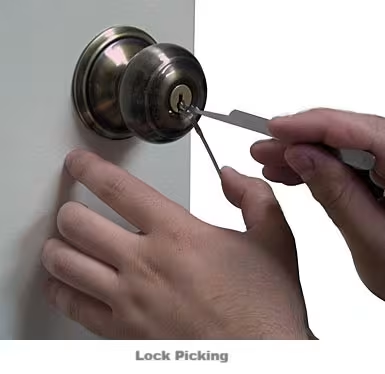
Why entry methods vary
A basic residential knob lock, high-quality deadbolt, old mortise lock, and damaged cylinder do not all present the same problem.
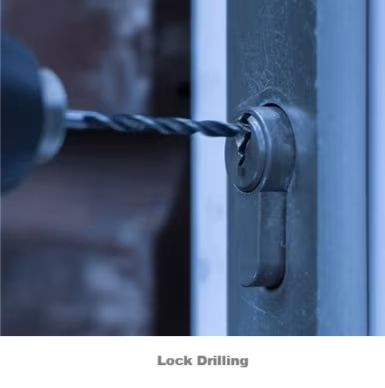
When drilling may be necessary
If the lock has failed internally, is damaged, cannot reasonably be manipulated, or another non-destructive method is not practical, drilling or replacement may become necessary.
If destructive work is recommended, the reason and expected replacement needs are explained before proceeding.
Preserving the door
Even when a failed lock must be replaced, the objective is to avoid unnecessary damage to the door, trim, frame, and surrounding hardware.
Types of Residential Locks and Doors We Service
Residential properties use many types of locks. Identifying the hardware helps determine the appropriate way to restore access.
Knob locks
Knob locks are common on residential doors and may use a spring latch controlled by the exterior key cylinder.
Lever locks
Residential lever sets use similar latch mechanisms but provide lever-style operation.
Deadbolts
Deadbolts use a solid bolt that extends into the frame and usually require a different entry approach from a basic spring latch.
Mortise locks
Older homes and some apartment doors use Mortise locks with a larger mechanism installed inside the door edge.
Wood doors
Wood residential doors are common, but older doors can have movement, wear, or decorative hardware that affects how lockout service should be approached.
Metal and fiberglass doors
Many modern entry doors use metal or fiberglass skins over reinforced internal structures. Entry work should account for the door construction and surrounding trim.
Apartment and Condo Lockouts
Apartment and condominium lockouts can involve additional access and authorization considerations because the resident may not own the door or locking hardware.
Property-management procedures
Some buildings maintain their own lockout or master-key procedures. Checking with management may sometimes provide the fastest solution.
Authorization
We provide entry only for authorized occupants or property representatives. Identification, lease information, management confirmation, or other evidence of authorization may be requested depending on the situation.
Master-key systems
Some multi-unit properties use master-keyed locks. Unauthorized alteration of that keying arrangement can create problems for management, so rekeying or replacement should be coordinated when necessary.
Building-controlled doors
If the door or lock belongs to the property rather than the individual resident, approval may be required before drilling, changing, or modifying the hardware.
Urgent House Lockout Situations
Some residential lockouts involve circumstances that are more urgent than ordinary inconvenience.
Child locked inside
If a child is inside and there is an immediate danger or medical concern, emergency services may be the appropriate first call rather than waiting for routine locksmith service.
Medical emergency
If someone inside may be injured, unconscious, or in immediate danger, call emergency services.
Fire, smoke, or gas concern
Do not wait for a locksmith if there is an active fire, smoke condition, suspected gas leak, or other immediate life-safety hazard.
Pet locked inside
If temperature or another condition creates immediate danger to an animal, emergency assistance may be appropriate depending on the circumstances.
Ordinary urgent lockout
For a typical residential lockout without an immediate life-safety emergency, mobile locksmith service can restore access directly at the property.
What Happens After the Door Is Open?
Once access is restored, the next step depends on what caused the lockout.
Keys were simply inside
If the lock and key both work normally, no additional service may be necessary.
Key was lost
If the missing key creates a security concern, rekeying or replacing the lock may be considered.
Key broke
The cylinder and remaining keys should be checked for wear or damage.
Lock malfunctioned
If the lock itself caused the lockout, we evaluate whether adjustment, repair, rekeying, or replacement is needed before relying on it again.
Door is misaligned
Correcting strike or door alignment may be more important than replacing an otherwise functional cylinder.
When Rekeying or Lock Replacement Makes Sense
Entry service and security changes are separate decisions. Being locked out does not automatically mean every lock needs to be changed.
Rekeying
Rekeying changes the internal key combination while keeping compatible existing hardware in place. This can make old, lost, or stolen keys stop working.
Lock replacement
Lock replacement installs new hardware and may be appropriate when the current lock is worn, damaged, unreliable, or no longer provides the features you want.
When no change is needed
If the key was simply locked inside and the hardware is operating normally, opening the door may be the only service required.
How House Lockout Service Works
1. Tell us what happened
Let us know whether the keys are inside, lost, stolen, broken, or whether the lock simply stopped working.
2. Identify the door and lock
If possible, tell us whether the door has a knob lock, lever, deadbolt, mortise lock, or another type of hardware.
3. Verify authorization
Before access-sensitive work begins, appropriate authorization to enter the property is confirmed.
4. Inspect the opening
The locksmith evaluates the lock, door, frame, strike, and visible hardware to determine the likely problem.
5. Explain the recommended entry method
The service approach and expected price are explained before authorized work begins.
6. Restore entry
An appropriate entry method is used based on the lock and door.
7. Test the lock afterward
After entry is restored, the lock is checked to determine whether it still operates normally.
8. Discuss additional service only if needed
If the key is lost, the lock failed, or the hardware is damaged, rekeying, repair, or replacement options can be discussed.
House Lockout Cost Factors
The cost of house lockout service in Austin depends on the door, lock, lockout cause, and work required to restore access.
Factors that can affect the price
- Service call
- Lock type
- Deadbolt, knob, lever or mortise
- Condition of the lock
- Whether the key is lost, broken, or simply inside
- Broken-key extraction
- Internal lock failure
- Whether non-destructive entry is practical
- Need for drilling or replacement
- Door and frame condition
- Location within the Austin service area
- Additional authorized rekeying or replacement work
Prices are estimates until the door and lock can be evaluated. The final price is confirmed before authorized work begins.
House Lockout FAQ
Can a locksmith open my house door?
Yes. A residential locksmith can provide authorized entry for many common house, apartment, and condo locks.
Can you open a house lock without damaging it?
Many lockouts can be resolved without replacing the existing hardware, but the available entry method depends on the lock design, condition, and circumstances.
Will you have to drill my lock?
Not necessarily. Drilling is generally considered when the lock cannot reasonably be opened using a less destructive method or when the lock itself has failed.
Do I need to change my lock after being locked out?
No. If the keys were simply inside and the lock is functioning normally, replacement may be unnecessary.
Should I change my lock if my key is lost?
That depends on the circumstances. Rekeying or replacement may be worth considering if the missing key could be associated with the property or used by someone else.
What is the difference between rekeying and changing the lock?
Rekeying changes the internal key combination while retaining compatible existing hardware. Lock replacement installs a different lock.
Can you rekey the lock during the same visit?
Often, yes, when the existing cylinder is compatible and in serviceable condition.
Can you open a deadbolt?
Many residential deadbolt lockouts can be serviced. The appropriate method depends on the lock and condition of the opening.
Can you open a smart lock?
Many smart-lock problems can be evaluated, but the solution depends on whether the issue is electronic, battery-related, mechanical, or configuration-related.
Can you open an old mortise lock?
Many mortise-lock situations can be serviced, but older hardware can vary considerably in construction and condition.
Can you remove a broken key from my house lock?
Broken-key extraction is possible in many situations. The condition and position of the fragment determine the available options.
Why does my key fit but not turn?
Possible causes include key wear, cylinder damage, internal lock failure, contamination, deadbolt pressure, or door misalignment.
Why does my lock work only when I push the door?
This usually indicates misalignment between the latch or deadbolt and the strike.
Can you unlock an apartment door?
Yes, when the requester is authorized to enter. Building or property-management procedures may also apply.
Do I need ID to have my house unlocked?
Authorization must be confirmed before access is provided. Depending on the situation, identification, lease information, property records, management confirmation, or another form of verification may be used.
What if my ID is locked inside the house?
That can happen. Other available information or authorization methods may be used depending on the circumstances.
Should I call 911 if a child is locked inside?
If there is an immediate danger, medical issue, extreme heat, fire, or another life-safety emergency, call emergency services rather than waiting for routine locksmith assistance.
Can I use a credit card to open my door?
Improvised entry attempts can damage the latch, trim, door, or frame and do not work on many lock types, especially deadbolts. Professional entry is safer for the hardware.
Can I drill the lock myself?
Drilling can damage the cylinder, lock body, door, or surrounding hardware and may make professional entry more difficult. It is usually better to have the lock evaluated first.
Why Choose Okey DoKey Locksmith for a House Lockout?
Okey DoKey Locksmith provides fully mobile residential locksmith service throughout Austin. The service is performed at your door so the actual lock, frame, strike, and door condition can be evaluated before entry is attempted.
Experienced residential locksmith service
Residential lockouts can involve more than a missing key. Deadbolt pressure, worn cylinders, broken keys, mortise hardware, and door alignment can all create similar symptoms. Identifying the actual cause helps avoid unnecessary replacement.
Entry method matched to the lock
We do not treat every residential lock as identical. The approach depends on the lock type, door construction, condition, and reason for the lockout.
Clear explanation before work begins
The recommended service and expected cost are explained before authorized work begins.
Testing after entry
After the door is opened, we check the lock to determine whether it can continue to operate reliably or needs additional attention.
Mobile House Lockout Service Around Austin
Okey DoKey Locksmith provides house lockout service throughout Austin and nearby areas during our extended service hours. We come directly to houses, apartments, condos, townhomes, and other authorized residential properties.
When contacting us, tell us your location, whether the keys are inside, lost, stolen, or broken, what type of lock is on the door if you know, and whether the lock was working normally before the lockout.
This information helps us understand the situation and prepare for the service visit.
Get Help With a House Lockout in Austin
If you are locked out of your house in Austin, Texas, Okey DoKey Locksmith provides mobile residential locksmith service directly at your property.
Whether the keys are inside, completely lost, broken in the lock, or the lock itself has stopped working, we can inspect the opening and determine an appropriate way to restore authorized access.
Our goal is to provide careful entry, clear communication, protection of your property, and a practical solution that restores access without unnecessary work.
