

Lock Change & Install Austin Texas - Okey DoKey Locksmith
Okey DoKey Locksmith provides mobile lock change and lock installation in Austin, Texas for homes, apartments, rental properties, offices, and commercial buildings. We replace worn, damaged, outdated, or compromised locks and install new hardware directly at your location. Whether you are moving into a new property, dealing with lost keys, upgrading security, or replacing hardware that no longer works reliably, our technicians focus on proper fit, clean installation, smooth operation, and dependable security.
Not every security problem requires a complete lock replacement. In some situations, rekeying the existing lock may be enough to stop old keys from working while keeping good hardware in place. When the lock is damaged, loose, outdated, poorly fitted, or no longer matches your security needs, replacement is usually the better option. We evaluate the door and existing hardware first so you understand whether a lock change, rekey, adjustment, or upgrade makes the most sense.
Contents
- Lock Change Service in Austin
- When a Lock Change Is the Right Choice
- Changing Locks After Moving Into a New Home
- Residential Lock Change Options
- Lock Types We Install and Replace
- Lock Change vs Lock Rekey
- Commercial Lock Change and Access Needs
- Security Upgrades and Modern Hardware
- Experienced Austin Locksmith for Lock Changes
- Lock Change Cost Factors
- Frequently Asked Questions
- Lock Change Service Area Around Austin
- How the Lock Change Process Works
- Get Help With a Lock Change
Lock Change Service in Austin
A lock change replaces the existing lock hardware with a new lock and new key system. This is often the right choice when the current lock is damaged, worn, unreliable, outdated, or no longer provides the level of security you want. Our mobile locksmith service performs lock replacement on-site throughout Austin so the work can be completed where the door and hardware are actually installed.
A good lock installation involves more than removing one lock and attaching another. The technician checks the door thickness, bore hole, backset, latch position, strike alignment, deadbolt throw, cylinder operation, and overall door fit. If the door is sagging or the frame is misaligned, simply installing a new lock may not solve the problem.
After installation, the lock is tested repeatedly from both sides of the door. The key should turn smoothly, the latch or bolt should engage without forcing the door, and the hardware should feel secure without excessive movement. Proper alignment is one of the most important parts of reliable lock operation.
When a Lock Change Is the Right Choice
There are many situations where replacing the lock is more practical than continuing to repair or rekey existing hardware. Common reasons include moving into a property, replacing damaged locks after an attempted break-in, upgrading low-quality hardware, dealing with repeated lock failures, or changing to a different style of lock.
A lock that is loose, sticking, grinding, difficult to turn, or failing to latch correctly may be worn internally or poorly aligned with the door frame. In some cases, adjustment is enough. In others, the hardware has reached the point where replacement provides a more reliable long-term solution.
Lost or stolen keys do not automatically mean the entire lock must be replaced. If the hardware is still in good condition, rekeying may be sufficient. If the lock is already worn or you want stronger hardware, however, a lock change can solve the access problem while improving the door at the same time.
Changing Locks After Moving Into a New Home
Moving into a new home is one of the most common reasons customers contact us about lock changes and rekeying in Austin. Even when the previous owner or tenant returns every known key, there is usually no practical way to know how many copies may still exist.
Old keys may have been given to relatives, contractors, cleaners, maintenance workers, pet sitters, previous tenants, or other people over the years. Resetting access means those unknown copies no longer control the property.
If the existing locks are modern, secure, and working properly, Lock Rekey service may be the most economical solution. If the locks are worn, mismatched, outdated, difficult to use, or you want new hardware, replacing them provides a complete reset.
Customers with several exterior doors can also ask about having compatible locks keyed alike so one key operates multiple entrances instead of carrying a separate key for each door.
Residential Lock Change Options
Residential lock replacement commonly includes front doors, back doors, side entrances, garage entry doors, gates, and other exterior access points. We work with homeowners, renters with proper authorization, landlords, and property managers who need residential lock change service at the property.
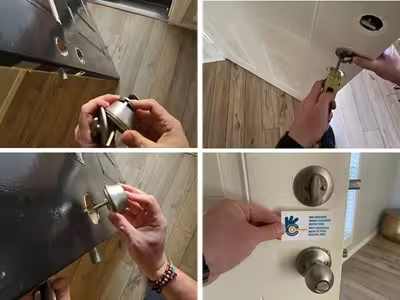
Common residential hardware includes keyed entry knobs, lever handles, deadbolts, keypad locks, and selected mortise systems. The correct hardware depends on the door preparation, how frequently the door is used, and the level of security and convenience you want.
Deadbolt locks are one of the most common residential security upgrades because they add a dedicated locking bolt separate from the door handle. When the door already uses mortise hardware, our Mortise locks information explains how those systems differ from standard cylindrical locks.
Door condition also matters. A new lock should not be expected to compensate for severe door sag, loose hinges, a damaged frame, or an improperly positioned strike. When minor adjustments are needed, we explain them before completing the installation.
Lock Types We Install and Replace
Different properties require different locking hardware. Our mobile lock installation service works with many common residential and commercial lock types, with attention to compatibility, door preparation, traffic level, and daily use.
Deadbolts
Deadbolts provide a separate locking bolt that extends into the strike and frame. We replace worn deadbolts, install new compatible units, and correct common issues such as loose cylinders, short bolt travel, and poor strike alignment. A properly installed deadbolt should extend fully without requiring the door to be pushed or pulled into position.
Customers comparing residential hardware can review Deadbolt VS Mortise for a practical explanation of the differences.
Keyed Entry Knobs and Lever Locks
Keyed knobs and lever handles are common on residential and light-commercial doors. These locks combine the latch and keyed cylinder into the handle assembly. Replacement may be appropriate when the handle becomes loose, the latch fails to retract correctly, the cylinder is damaged, or the hardware is being upgraded.
During installation, the technician checks the backset, latch orientation, spindle operation, and strike position so the door closes and locks smoothly.
Mortise Locks
Mortise locks use a larger lock body installed inside a pocket cut into the edge of the door. They are commonly found on commercial properties and some older or higher-end residential doors. Because the internal lock case must fit the existing preparation correctly, replacement requires careful measurements and alignment.
When a door is already prepared for mortise hardware, keeping a compatible mortise configuration is often more practical than converting the door to an unrelated lock type.
Commercial Cylindrical and Specialty Locks
Commercial doors may use heavier-duty cylindrical lever locks, mortise locks, storefront hardware, restricted key systems, or other specialized components. The proper choice depends on traffic, door construction, access requirements, and whether the hardware is part of a larger security system.
Lock Change vs Lock Rekey
Lock changing and rekeying are not the same service. Rekeying keeps the existing lock hardware but changes the internal key configuration so the old key no longer operates the lock. A lock change removes the existing hardware and installs a new lock.

If your lock is functioning well and the main concern is who has copies of the key, rekeying is often the more efficient option. It allows you to keep good hardware while making previous keys unusable.
If the lock is damaged, worn, unreliable, outdated, incompatible with your security goals, or you want to change hardware styles, replacement is generally the better choice. Customers do not need to decide before the technician arrives; the existing hardware can be evaluated first.
For properties with multiple locks, a combination can make sense. A damaged front-door lock may be replaced while functioning side and rear-door locks are rekeyed to match. When compatible hardware is used, several locks can often be keyed alike for greater convenience.
Commercial Lock Change and Access Needs
Businesses may need commercial lock changes in Austin after employee turnover, tenant transitions, lost keys, attempted break-ins, hardware failure, or changes in how a space is being used. We work with offices, retail properties, storage areas, service doors, and other commercial locations.
Commercial doors often experience heavier traffic than residential doors, so durability and correct installation become especially important. Hardware may include commercial cylindrical lever locks, mortise locks, storefront locks, master-keyed cylinders, electric strikes, and other access components.
When several employees or departments need different access levels, a master-key plan may be more practical than issuing unrelated keys. We can discuss the existing lock system and whether rekeying, replacement, or a more organized keying arrangement is appropriate.
Commercial customers who also need exit hardware can review our Panic Bar service.
Security Upgrades and Modern Hardware
A lock replacement is also an opportunity to improve security rather than simply installing another version of the same worn hardware. Depending on the property, an upgrade may involve a stronger deadbolt, reinforced strike hardware, improved key control, a keypad lock, or a higher-quality commercial lock.
Some lock products carry ANSI/BHMA grades that indicate performance categories. Grade 1 hardware is generally associated with heavier-duty applications, while Grade 2 is commonly used for higher-quality residential and light-commercial applications. Grade 3 hardware is typically associated with basic residential use. The actual rating depends on the specific tested product, so we do not assume a grade based only on appearance.
Regardless of lock quality, installation remains critical. A strong deadbolt provides limited benefit if the bolt does not extend fully into the strike or the frame is weak. We check latch and bolt engagement and explain when reinforcement or alignment improvements should be considered.
Experienced Austin Locksmith for Lock Changes

Ran Zarzewski has more than 15 years of locksmith experience working with residential, commercial, and automotive locksmith jobs. His residential and commercial experience includes lock replacement, rekeying, door hardware, deadbolts, access problems, and other common lock and security work.
Experience is useful because a lock problem is not always caused by the lock itself. A key that becomes difficult to turn can be related to the cylinder, latch, strike plate, door sag, hinges, frame alignment, or internal hardware. Identifying the actual cause before replacing parts helps avoid unnecessary work.
Lock installation also requires practical judgment about the existing door. Correct backset, bore size, latch positioning, bolt clearance, door thickness, and strike alignment all affect how the finished hardware performs. The goal is not simply to attach a new lock, but to leave the door operating reliably.
Lock Change Cost Factors
The cost of a lock change in Austin depends on the type and quality of the lock, the number of doors, the existing door preparation, and whether additional adjustment or repair is needed. Replacing a basic residential deadbolt is different from replacing a mortise lock or commercial-grade hardware.
Hardware cost also varies. A basic keyed lock, higher-grade deadbolt, electronic keypad lock, and commercial lever set can have very different material costs and installation requirements.
Door condition is another factor. If the strike is misaligned, the door is sagging, the existing bore is incorrect, or the frame is damaged, additional work may be required before the new lock can operate correctly.
For general pricing information, visit our Austin locksmith cost page. Final pricing depends on the actual hardware and condition found at the property.
Frequently Asked Questions
Should I change my locks after moving into a new home?
Changing or rekeying the locks is a practical way to reset access after moving. If the existing hardware is in good condition, rekeying may be enough. If the locks are worn, outdated, mismatched, or you want an upgrade, replacement may be more appropriate.
Is rekeying cheaper than changing locks?
Rekeying is often less expensive because the existing lock hardware remains in place. A lock change includes the cost of new hardware and installation. The condition of the existing lock should determine which option makes sense.
Can you change a lock without replacing the door?
Yes. In most cases, the lock can be replaced without replacing the door. The new lock must be compatible with the existing door preparation or the door may require modification for a different type of hardware.
Should I change or rekey my locks after losing a key?
If the hardware is working properly, rekeying is often enough to make the lost key unusable. If the lock is damaged, unreliable, or being upgraded anyway, replacement may make more sense.
Can all my doors use the same key?
Often, yes. Compatible locks can frequently be keyed alike so one key works with several doors. Brand, cylinder type, and keyway compatibility determine whether existing and new locks can share the same key.
Can you replace a deadbolt and door knob at the same time?
Yes. A keyed knob or lever and a separate deadbolt can be replaced during the same visit. They can often be keyed alike when compatible hardware is selected.
Do you install customer-supplied locks?
In many cases, yes, provided the lock is compatible with the door and includes the required parts. Compatibility should be checked before installation because incorrect backset, bore requirements, door thickness, or handing can prevent proper installation.
What is the difference between a deadbolt and a mortise lock?
A deadbolt is generally a standalone bolt installed through standard door preparation. A mortise lock uses a larger integrated lock body recessed into the edge of the door. See Deadbolt VS Mortise for more detail.
Do you install Grade 1 or Grade 2 locks?
We can work with different lock grades depending on the application and hardware selected. The actual ANSI/BHMA grade must be verified on the specific product rather than assumed from the style of lock.
Can you change locks at rental or commercial properties?
Yes, lock changes can be performed for property owners, landlords, property managers, and authorized business representatives. Authorization may be confirmed before work begins when the person requesting service is not the occupant or property owner.
Lock Change Service Area Around Austin
Okey DoKey Locksmith provides mobile lock change and lock installation throughout Austin and nearby communities. Because we operate as a service-area business, the technician comes directly to the home, rental property, office, or commercial location where the locks are installed.
Service is available in Austin and surrounding communities including Round Rock, Cedar Park, Pflugerville, Georgetown, Leander, Lakeway, Bee Cave, Buda, Kyle, Manor, Elgin, and Del Valle, subject to technician availability and routing.
When scheduling service, provide your location, the number of locks or doors involved, and any information you know about the existing hardware. Photographs can also be useful when the lock or door configuration is unusual.
How the Lock Change Process Works
The process begins by identifying the door type, existing hardware, and the reason for replacement. The technician checks whether the current lock can simply be rekeyed or adjusted, or whether new hardware is the more practical option.
If replacement is recommended, compatible lock options are discussed before installation begins. The new hardware is fitted to the existing door preparation whenever possible, with attention to backset, bore size, latch alignment, strike position, bolt travel, and cylinder operation.
After installation, the door is closed and opened repeatedly while the lock is tested from both sides. Keys, thumb turns, handles, latches, deadbolts, and electronic features are checked as applicable. If several locks are being keyed alike, each lock is tested with the intended key before the job is completed.
Final testing is important because a new lock should not only look correct; it should operate smoothly under normal daily use.
Get Help With a Lock Change
If you need a lock change or lock installation in Austin, Texas, Okey DoKey Locksmith can provide mobile service at your home or business. We replace damaged and outdated locks, install new deadbolts, knobs, levers, mortise hardware, and selected commercial locks, and can also explain when rekeying is the better option.
When you contact us, describe the type of property, number of doors, existing locks, and the reason you want them changed. From the initial inspection through installation and final testing, our goal is to provide clear recommendations, careful workmanship, and locks that operate reliably after the service is complete.
